
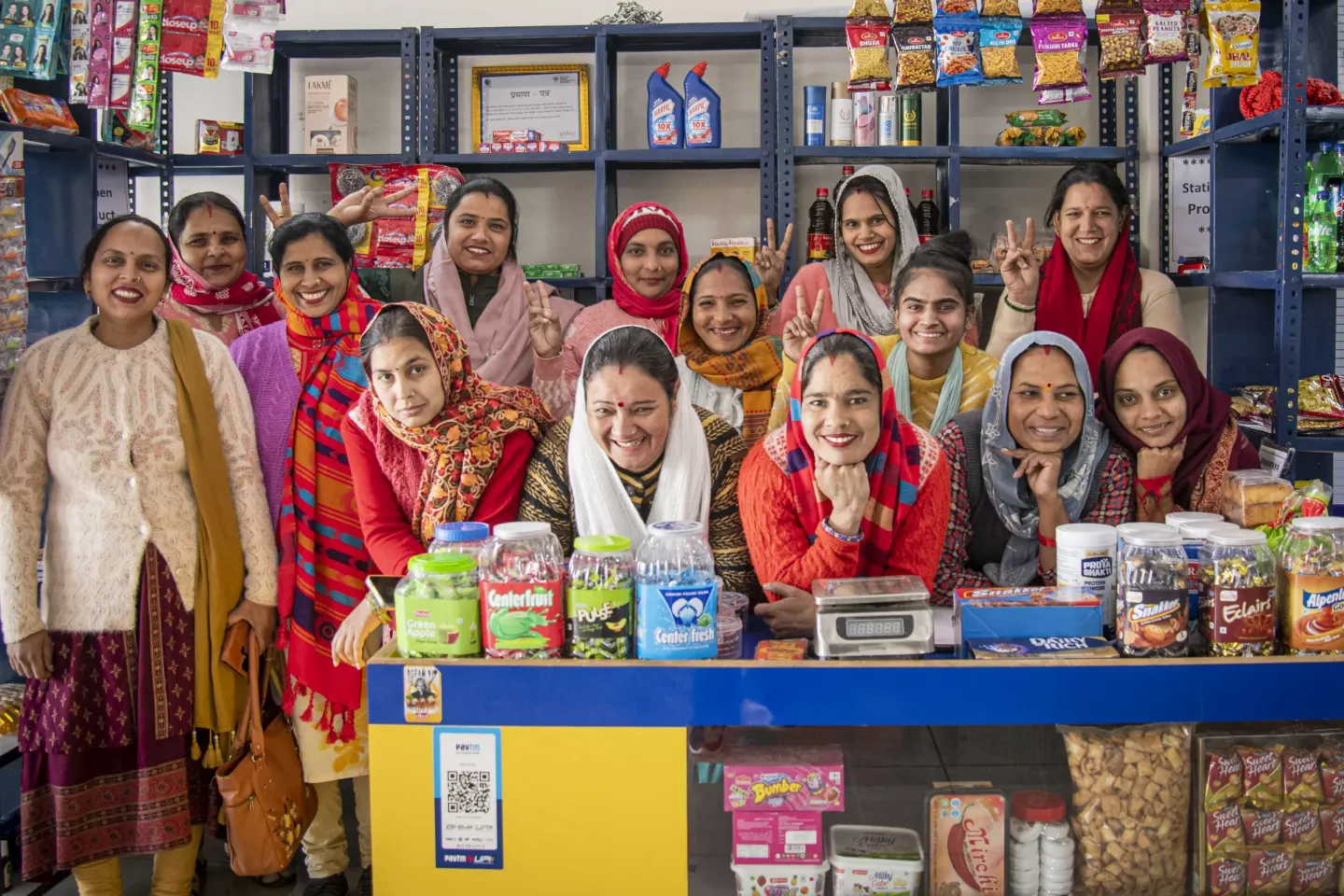
Women entrepreneurship is gaining importance in India’s economic landscape, spanning technology startups, small businesses, manufacturing and rural enterprises. Government-backed initiatives, startup support programmes and self-help groups are creating avenues for women to develop businesses, access livelihood opportunities and participate more actively in economic activity.
In the startup ecosystem, women entrepreneurs are building businesses across sectors, including financial technology, healthcare, education, consumer products, agriculture and enterprise technology. Their participation reflects the expanding scope of entrepreneurship, with businesses increasingly using digital platforms and new business models to reach customers and develop markets.
Rural entrepreneurship is another important part of this development. Women’s self-help groups provide a collective platform for members to undertake economic activities, develop products and access institutional support. Enterprises based on food processing, textiles, handicrafts, agriculture and local services can help women build income-generating activities around existing skills and resources.
Government initiatives such as the Lakhpati Didi programme seek to support women associated with self-help groups in achieving sustainable annual household incomes. Other entrepreneurship and financial-inclusion programmes also aim to improve access to training, credit and business support. The effectiveness of these initiatives ultimately depends on whether participants can establish viable enterprises and sustain their earnings over time.
However, starting a business is only the first step. Women entrepreneurs can face challenges involving access to finance, market connections, business networks, technology and operational resources. For manufacturing and product-based enterprises, quality standards, packaging, distribution and reliable access to buyers are also essential to expansion.
Digital commerce and online business platforms offer opportunities to reach customers beyond local markets. Yet, sustained growth requires more than digital visibility. Entrepreneurs need sound financial management, consistent demand, competitive products and the ability to fulfil orders reliably.
For India’s wider business ecosystem, strengthening women-led enterprises presents an opportunity to broaden entrepreneurship across both urban and rural markets. Better access to finance, skills development, institutional buyers and established supply chains could help more businesses move from small-scale operations towards sustainable growth.
The next stage of progress will depend on the ability of women entrepreneurs to build commercially viable enterprises, generate employment and expand into new markets. Creating an environment in which businesses can grow beyond their initial stages will be central to making women’s entrepreneurship a lasting contributor to India’s economic development.