
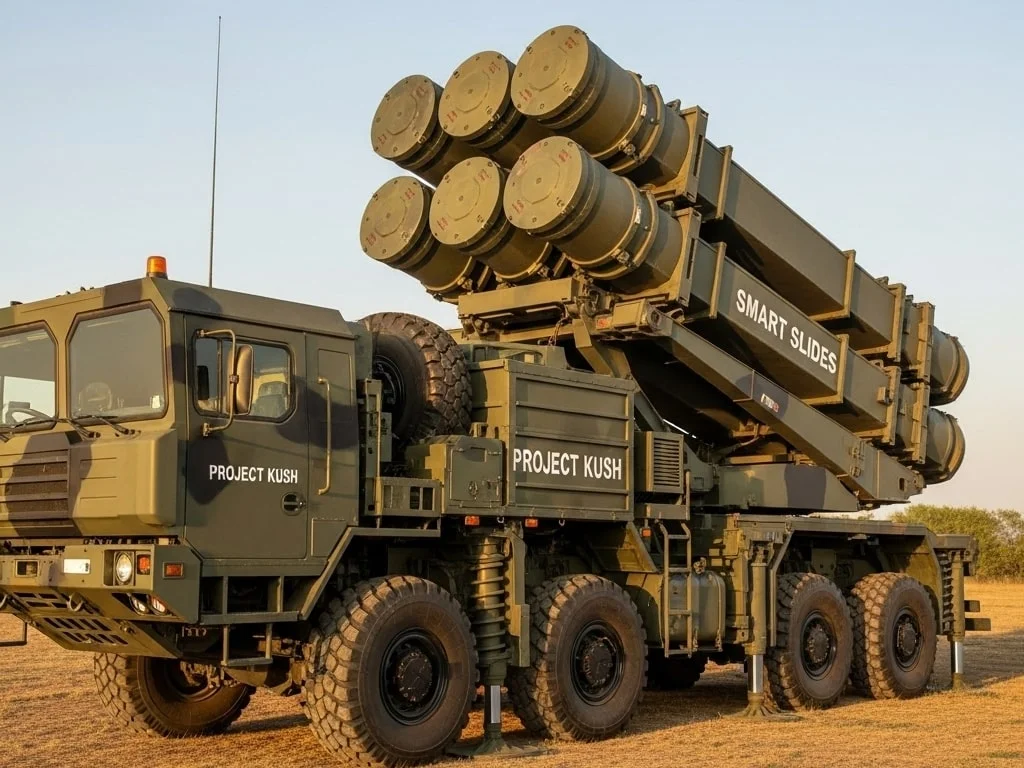
India is entering a new chapter in air defence modernization. As regional security dynamics evolve and aerial threats become increasingly sophisticated, the country is accelerating investments in indigenous missile systems, integrated surveillance networks, and next-generation command-and-control capabilities. At the heart of this transformation is the Kusha Long-Range Surface-to-Air Missile (LR-SAM) programme, developed by the Defence Research and Development Organisation (DRDO), which represents a significant milestone in India’s journey toward a comprehensive, self-reliant air defence architecture.
Recent successful flight tests have demonstrated the growing maturity of the Kusha programme, reinforcing India’s commitment to building advanced air defence systems capable of protecting strategic assets, military installations, and critical infrastructure. More than a single missile programme, Kusha reflects India’s broader ambition to create an integrated and technologically advanced air defence ecosystem.
The Need for a Modern Air Defence Shield
Modern warfare is increasingly defined by precision-guided missiles, stealth aircraft, drones, and long-range strike capabilities. Conventional air defence systems are no longer sufficient to counter the speed, complexity, and diversity of today’s aerial threats.
India’s expanding strategic footprint and critical infrastructure require a multi-layered air defence network capable of detecting, tracking, and neutralizing threats at varying ranges and altitudes. Indigenous systems such as Kusha are expected to strengthen this layered approach, complementing existing capabilities while reducing dependence on imported platforms.
Kusha: A Strategic Technological Milestone
The Kusha programme represents one of India’s most ambitious indigenous air defence initiatives. Designed to engage multiple aerial threats simultaneously, the system integrates advanced radar, command-and-control technologies, and interceptor missiles into a unified operational framework.
Its development highlights the growing capabilities of India’s defence research ecosystem and showcases the country’s progress in complex missile engineering, sensor integration, and systems design. Successful testing also reinforces confidence in India’s ability to develop sophisticated defence technologies domestically.
Building an Integrated Defence Ecosystem
An effective air defence strategy extends beyond interceptor missiles. It requires seamless integration of surveillance aircraft, ground-based radar, communication networks, electronic warfare systems, and real-time battlefield intelligence.
India is steadily building this integrated architecture through programmes such as indigenous airborne early warning systems, advanced radar networks, and digital command platforms. Together, these capabilities improve situational awareness, accelerate decision-making, and enhance operational readiness across the armed forces.
Boosting Indigenous Defence Manufacturing
The Kusha programme also demonstrates the growing strength of India’s defence manufacturing ecosystem. Developed under the Atmanirbhar Bharat vision, the project encourages greater participation from public sector enterprises, private manufacturers, MSMEs, and technology startups.
Advanced missile systems require precision engineering, electronics, propulsion technologies, composite materials, software integration, and high-performance manufacturing. Their development creates opportunities across the entire industrial value chain while strengthening domestic capabilities in strategic technologies.
As indigenous programmes expand, India’s defence industry is becoming increasingly capable of supporting both national security requirements and future export opportunities.
Strategic Significance Beyond National Security
The successful development of advanced air defence systems enhances India’s strategic autonomy while reducing long-term dependence on imported military equipment. It also strengthens the country’s credibility as an emerging defence technology leader capable of designing and manufacturing complex weapon systems.
Growing indigenous capabilities contribute not only to military preparedness but also to technological innovation, high-value manufacturing, skilled employment, and industrial competitiveness.
Looking Ahead
The journey from successful missile testing to full combat readiness requires continued investment in research, manufacturing, systems integration, and operational deployment. Yet programmes like Kusha demonstrate that India is steadily moving toward a more resilient and self-reliant defence ecosystem.
As aerial warfare becomes increasingly technology-driven, integrated air defence will remain central to national security. With indigenous innovation, advanced manufacturing, and strong policy support working together, India is building more than a new missile system—it is creating the foundation for the next generation of air defence capability.
From Kusha to combat readiness, India’s next air defence leap reflects a broader transformation in defence manufacturing, technological innovation, and strategic preparedness. It signals a future in which Indian-designed and Indian-built systems play a defining role in safeguarding the nation’s skies while reinforcing its position in the global defence and aerospace landscape.