
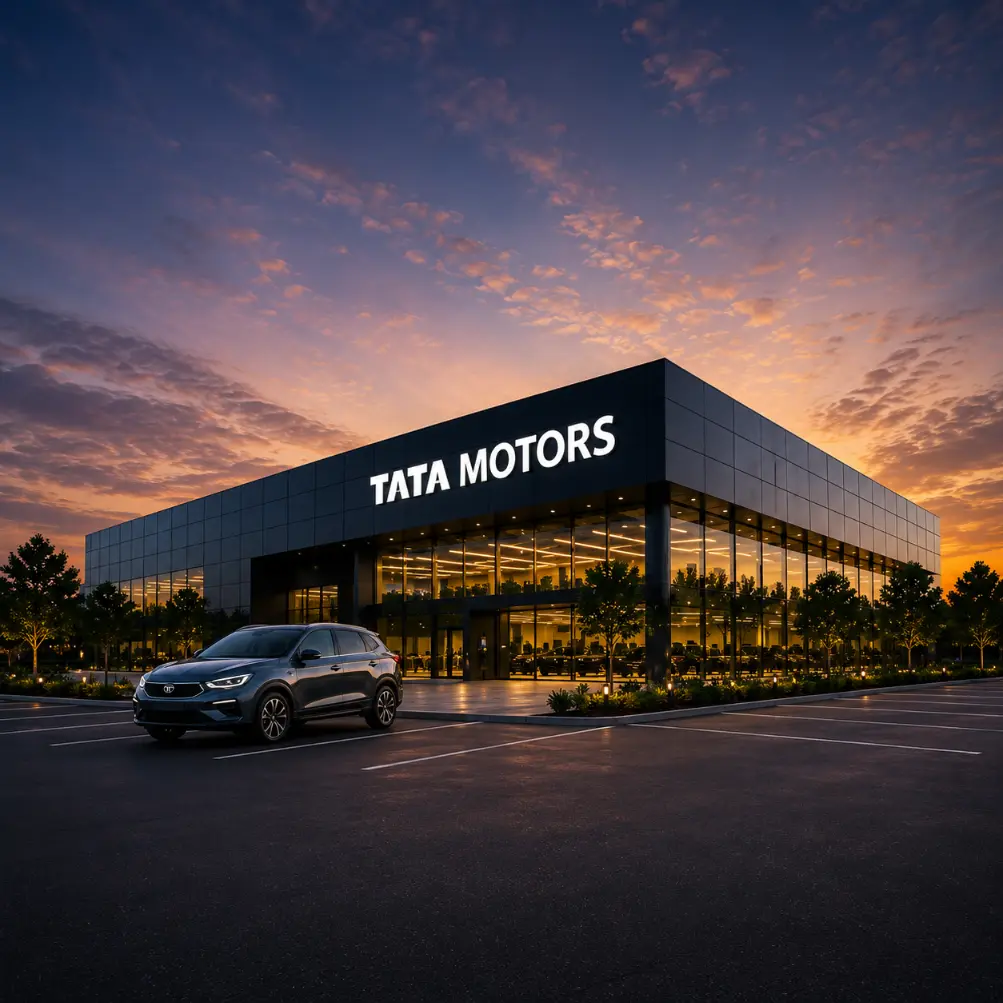
Engineering the Next Era of Intelligent Mobility
Few Indian manufacturers have transformed themselves as decisively as Tata Motors. In 2026, the company is no longer simply competing as an automotive manufacturer—it is positioning itself as a technology-driven mobility enterprise. Through investments in artificial intelligence, electrification, software-defined vehicles, advanced manufacturing, and clean energy, Tata Motors is building a roadmap that extends well beyond conventional vehicle production.
As global automotive markets shift toward connected, intelligent, and low-carbon transportation, Tata Motors is aligning its strategy around innovation, operational resilience, and sustainable growth.
A Vision Built Around the Future
Tata Motors’ long-term vision is centered on creating safer, smarter, greener, and more connected mobility solutions. Rather than treating electrification as a standalone business, the company is integrating digital technologies, intelligent manufacturing, and customer-centric innovation across its passenger and commercial vehicle portfolios.
The Company outlined ambitious growth objectives, including expanding passenger vehicle volumes, increasing market share, strengthening artificial intelligence capabilities, and accelerating investments in future-ready products. The company aims to achieve approximately 20% market share in India’s passenger vehicle market by the end of the decade while significantly expanding production capacity and its technology portfolio.
Artificial Intelligence Moves to the Center
Artificial intelligence is becoming a core pillar of Tata Motors’ transformation.
The company is integrating AI across engineering, manufacturing, product development, supply chain management, quality assurance, predictive maintenance, and customer experience. AI-powered digital engineering enables faster product development cycles, while intelligent analytics support improved manufacturing efficiency and vehicle performance.
The growing emphasis on software-defined vehicles also reflects a broader industry transition, where software updates, digital services, and connected ecosystems increasingly define the ownership experience rather than hardware alone.
Scaling Electric Mobility
Tata Motors continues to play a leading role in India’s electric vehicle market, but its 2026 strategy focuses on scaling rather than simply maintaining leadership.
The company is expanding its EV portfolio across multiple segments while investing in battery technologies, charging ecosystems, and connected digital services. Unlike competitors targeting premium niches, Tata Motors is pursuing a broader strategy aimed at driving mass adoption through a diverse range of electric products and powertrain options.
Future investments will support new vehicle platforms, improved battery efficiency, enhanced driving range, and intelligent digital features that strengthen long-term competitiveness.
Manufacturing Powered by Industry 4.0
Manufacturing excellence remains one of Tata Motors’ defining strengths.
Across its production facilities, the company is expanding the use of robotics, Industrial Internet of Things (IIoT), automation, digital twins, predictive maintenance, real-time quality monitoring, and advanced analytics. These technologies improve operational efficiency while supporting consistent product quality and faster production cycles.
The company’s manufacturing roadmap also incorporates renewable energy, energy-efficient operations, water conservation, waste reduction, and circular economy principles as part of its broader sustainability agenda.
Investing for Long-Term Growth
Tata Motors has outlined one of the industry’s most ambitious investment plans.
The company intends to invest substantially in passenger vehicles and electric mobility through FY2030 while expanding annual production capacity from approximately 900,000 vehicles to 1.3 million vehicles over the next few years. Revenue is projected to nearly double by FY2031, supported by an expanded product portfolio, greater technology integration, and stronger domestic demand.
This strategy reflects confidence in India’s long-term automotive growth story while preparing the company for increasing global competition.
Editorial Perspective
The automotive industry is entering a period where competitive advantage will depend as much on software, artificial intelligence, manufacturing intelligence, and sustainability as on mechanical engineering.
Tata Motors appears to recognize this shift. Its 2026 strategy signals a transition from being primarily a vehicle manufacturer to becoming a technology-enabled mobility company. Success will depend on the company’s ability to execute at scale, respond to intensifying competition, and continue innovating across electrification, connected technologies, and intelligent manufacturing. For India’s manufacturing sector, Tata Motors represents more than an automotive success story—it reflects how traditional industrial companies can reinvent themselves through technology, digital transformation, and long-term strategic investment