India’s solar manufacturing sector just picked up serious momentum. Premier Energies has switched on its new 7 GW N-type TOPCon G12R solar cell facility in Naidupeta, Andhra Pradesh, entering trial production and, in doing so, vaulting past its domestic rivals to become India’s largest solar cell manufacturer by capacity.
A Capacity Milestone for Indian Solar Manufacturing
The new line doesn’t just add numbers to a spreadsheet — it more than doubles the company’s cell-making muscle. With this addition, Premier Energies’ total solar cell manufacturing capacity now stands at 10.6 GW, and the company’s module manufacturing capacity has also crossed the 10 GW mark, reaching 11.1 GW. That combination of cell and module scale gives Premier Energies one of the most integrated manufacturing footprints in the Indian solar industry today.
Inside the Naidupeta Facility
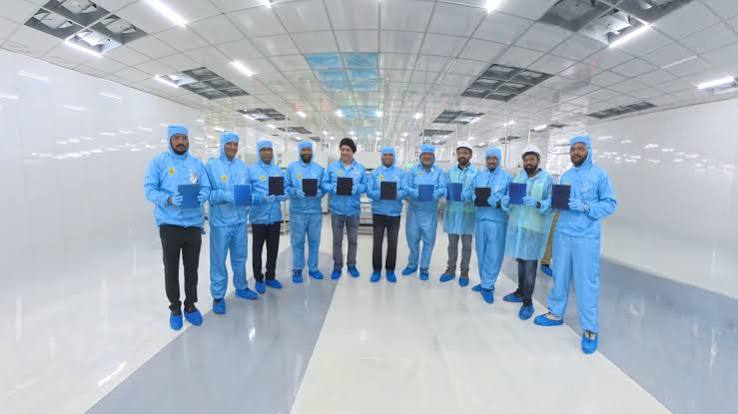
Spread across 101 acres, the Naidupeta plant represents a capital outlay of roughly Rs 3,293 crore (about $343.6 million), and the company says the project came in on schedule and within budget — no small feat for a manufacturing build of this scale. The facility has now entered trial production, and once fully stabilized it’s designed to churn out approximately 88,000 solar cells every hour, powered by highly automated G12R TOPCon production lines.
What sets this plant apart isn’t just its size. Premier Energies has leaned heavily on automation and analytics: predictive performance monitoring, tighter process controls, and automated transport and packaging are all built into the line, aimed at squeezing out more consistency and efficiency at scale. Post-stabilization, the company is targeting average cell efficiency of around 25.8% — a competitive figure in the current TOPCon landscape.
Built to Scale With the Technology Curve
Perhaps the most forward-looking part of this announcement is the upgrade path. The facility isn’t a static, one-generation asset — it’s engineered to accommodate next-generation TOPCon+ upgrades, including poly-finger metallisation and more advanced edge-isolation techniques. Rather than betting everything on today’s efficiency numbers, Premier Energies is building infrastructure flexible enough to absorb future technology gains without a full rebuild.
What This Means for Premier Energies’ Strategy
Company leadership has framed the expansion as more than a pure capacity play. Managing Director Chiranjeev Saluja pointed to the timing of the ramp-up as strategically significant, tying it directly to the company’s plans for backward integration into ingots and wafers — a move that would extend Premier Energies’ control further up its supply chain, beyond just cells and modules.
That stated ambition — moving upstream into ingots and wafers — is a structural shift worth watching. If the company follows through, it would put Premier Energies among a smaller set of Indian manufacturers building a genuinely vertically integrated solar production base, rather than depending on cell or wafer inputs sourced elsewhere.
A Broader Signal for Domestic Manufacturing
This commissioning arrives as India’s solar manufacturing base continues to scale up rapidly, with several domestic players expanding cell and module capacity in the same window. A single 7 GW addition of this scale is a meaningful marker of that momentum, adding to the country’s overall domestic cell-manufacturing base at a time when developers and buyers — both in India and abroad — are increasingly weighing supply chain diversification and reliability alongside price.
The Bigger Picture
Premier Energies’ move fits into a broader wave of capacity expansion across India’s solar sector, as manufacturers race to scale up ahead of rising demand from utility-scale renewable projects, rooftop solar growth, and export opportunities. With the Naidupeta line still in its stabilization phase and a stated ambition to move upstream into ingots and wafers, the next milestones to watch will be how quickly the facility reaches its targeted efficiency and whether the company follows through on deeper vertical integration.