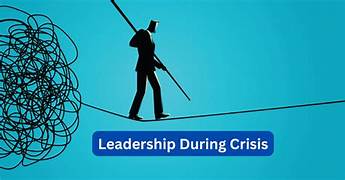
When a company is in trouble, employees don’t look at the balance sheet first. They look at the CEO.
They watch who speaks, who stays silent, who takes responsibility and who disappears behind carefully written corporate statements.That is when leadership stops being a title and becomes a test.
In normal times, almost anyone can look like a good CEO. Growth creates confidence. Strong results create credibility. But a crisis removes that protection.
When layoffs become unavoidable, a cyberattack disrupts operations, a major customer walks away or an external shock threatens the business, employees ask a very different question:
“Can I trust this person when things go wrong?”
Silence Is Not Leadership
One of the biggest mistakes CEOs make during a crisis is waiting until they have all the answers before communicating. But silence creates its own narrative.
Employees begin speculating. Rumours spread. A temporary disruption becomes a financial crisis. A restructuring becomes a threat to jobs. Uncertainty becomes fear.
Employees don’t expect CEOs to know everything. They expect them to be honest about what they know—and what they don’t.
This is what happened. This is what we know. This is what we are doing. This is what comes next.
That clarity can be more powerful than reassurance.
Employees Don’t Need a Hero
During a crisis, CEOs often feel pressure to appear completely confident. But employees don’t need a superhero. They need an adult in the room.
A leader who can acknowledge difficult realities without creating panic. Someone willing to accept responsibility without searching for convenient scapegoats.
The leadership response of Mary Barra during General Motors’ ignition-switch crisis illustrated an important principle: when organisational trust is damaged, accountability cannot simply be delegated.
A CEO doesn’t have to accept blame for every external event. But they do have to accept responsibility for leading the organisation through it.
The Real Test Is Sacrifice
Nothing exposes organisational culture faster than cost-cutting. Employees notice when they are asked to accept salary restraint, reduced benefits or job losses while senior leadership appears untouched.
The issue isn’t whether every sacrifice must be identical. It is whether leadership demonstrates that it understands the human cost of its decisions.
A difficult decision can still be respected when it is explained honestly. A necessary decision becomes destructive when employees feel they were never given the truth.
Don’t Turn Crisis Into Micromanagement
Another common mistake is pulling every decision to the top. Suddenly, every approval needs the CEO. Every communication needs executive clearance. Every operational problem becomes a boardroom discussion.
That isn’t decisive leadership. It’s organisational paralysis.
Strong crisis leaders establish priorities, define decision rights and empower the people closest to the problem to act.
The CEO’s job is to create clarity—not become the bottleneck.
The Crisis Will End. The Memory Won’t.
Markets recover. Operations stabilise. Financial results eventually improve. But employees remember how leadership behaved when the organisation was under pressure. They remember whether the CEO told them the truth. They remember whether leadership listened. They remember who accepted responsibility.
And they remember whether people were treated as partners in the crisis—or simply as costs. That memory becomes culture.
The real CEO test, therefore, is not what happens when everything goes according to plan.
It is what happens when the plan breaks.
In those moments, employees don’t need another motivational speech.
They need a leader they can believe.
Because during a crisis, employees are not judging the confidence of the message. They are judging the credibility of the person delivering it.