
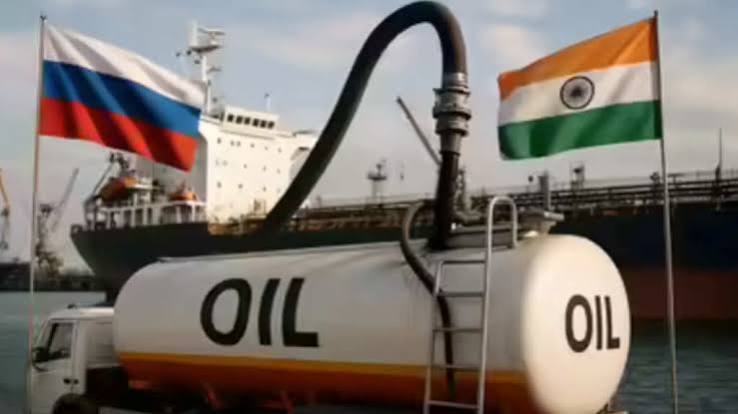
India’s growing dependence on Russian crude has become a geopolitical pressure point, but a potential tariff shock may not translate into an economic crisis. The country’s large refining base, diversified sourcing options and experience navigating volatile global energy markets could provide a meaningful buffer.
The immediate concern is straightforward: tougher measures against countries buying Russian oil could raise the cost of continuing those purchases. Yet the impact on India will depend on what happens to global oil prices, how quickly refiners adjust their crude basket and whether Russian barrels remain significantly cheaper than alternatives.
The Russian Oil Advantage Is Already Narrowing
Russian crude became particularly attractive to Indian refiners after 2022 because of substantial discounts. That price advantage helped refiners lower input costs while strengthening India’s position as a major refining and petroleum-products exporter.
But the economics are changing. The discount on Russian Urals delivered to India has narrowed considerably from the levels seen in the immediate aftermath of the Russia-Ukraine war. That matters because a tariff or sanctions-related disruption becomes less economically painful when the underlying Russian discount is already small.
The question is no longer simply whether India can replace Russian barrels, but at what cost.
India Has More Options Than It Did Four Years Ago
India is not dependent on a single source of crude. Its refiners have historically sourced oil from the Middle East, Africa, the United States and other markets, giving them the ability to adjust procurement when prices, freight rates or geopolitical risks change.
This flexibility is one of India’s strongest defences against an external energy shock. If Russian crude becomes commercially unattractive, refiners can redirect purchases towards alternative suppliers.
However, replacement will not necessarily be cost-neutral. Freight, insurance, crude quality and refining compatibility can all influence the economics.
Refining Capacity Is India’s Strategic Cushion
India’s refining sector adds another layer of resilience. Large refiners can process different grades of crude and optimise their feedstock according to availability and margins.
This is particularly important because the impact of losing discounted Russian crude would not be limited to the oil-import bill. It could affect refinery margins, transportation costs, petrochemicals, aviation fuel and manufacturing inputs.
India’s refining ecosystem gives the country an ability to adapt rather than simply absorb the shock passively.
The Bigger Risk Could Be the Global Oil Price
For India, the most serious risk may ultimately be the price of crude itself rather than the tariff on Russian oil.
If sanctions or tariffs significantly disrupt Russian supplies, global crude prices could rise. India would then face a higher import bill regardless of where its refiners source their barrels.
A weaker rupee could amplify that pressure because crude is predominantly purchased in dollars. Higher energy costs could then feed into transportation, logistics, chemicals, aviation and manufacturing.
This creates a crucial distinction: India may be able to replace Russian crude, but replacing it cheaply is the real challenge.
The Manufacturing Economy Will Be Watching
For India’s industrial economy, the oil story extends far beyond petrol and diesel.
Higher crude prices can raise the cost of plastics, chemicals, synthetic materials, transportation and industrial logistics. Energy-intensive manufacturers could face margin pressure, while exporters could confront higher freight and production costs.
But a manageable increase in crude prices would be very different from a sustained global oil shock.
That is why the resilience of India’s energy system matters. Diversification can reduce the impact of losing one supplier, even though it cannot eliminate the consequences of higher global prices.
The Real Test Is India’s Ability to Adapt
A Russian-oil tariff shock would not be painless for India. It could put pressure on the current account, the rupee, inflation and industrial costs.
Yet the country enters this period with more experience, greater refining flexibility and a broader network of crude suppliers than it had before the Russia-Ukraine war.
The emerging lesson is therefore less about India’s dependence on Russian oil and more about India’s ability to continuously optimise its energy mix.
If Russian crude becomes commercially unattractive, Indian refiners can search for alternatives. If global crude prices remain contained, the transition could be relatively manageable. But if geopolitical restrictions trigger a broad supply shock and push oil sharply higher, the impact will be much harder to contain.
For India, resilience will not mean avoiding the shock altogether. It will mean absorbing it, reallocating supplies and keeping the wider industrial economy moving.
That may ultimately be why the Russian oil tariff threat could prove less disruptive to India than the headline risk initially suggests.