India’s agriculture sector is becoming a bigger technology opportunity, but the real challenge is not simply putting farming services online. It is making technology useful across the entire agricultural value chain. DeHaat is building its business around that challenge.
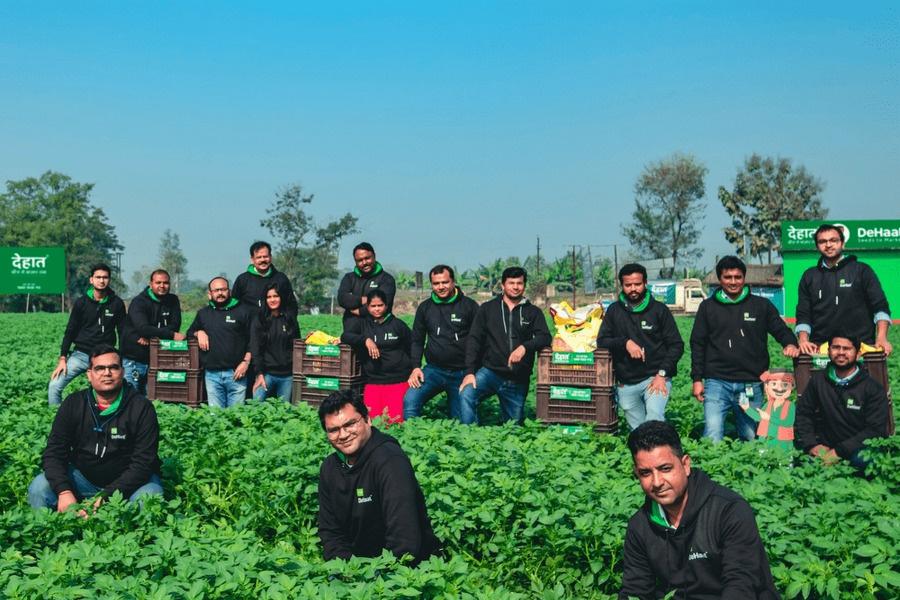
Founded in 2012, DeHaat has developed an agri-tech platform that combines agricultural inputs, advisory services, market access and other services for farmers. The company currently says it operates across 12+ agrarian states, with 11,000+ DeHaat Centres and 503+ Farmer Producer Organisations (FPOs), and serves more than 3 million farmers. Its current service portfolio includes soil testing, agri-inputs, dairy inputs, drone spraying, financial services, advisory support and market linkages.
The scale figures have changed over time as DeHaat has expanded. ETtech reported in January 2025 that the company operated in 12 states through more than 13,000 centres and 90 hubs, serving around 3 million farmers at that point.
More Than a Farming App
Agriculture is not a single transaction.
A farmer needs access to inputs before cultivation, information during the crop cycle and a reliable route to market after harvesting. This makes agriculture fundamentally different from businesses where a customer can simply download an application and complete a transaction.
DeHaat has built its model around multiple stages of this journey.
The company’s current platform offers agricultural products and services alongside digital tools such as crop guides, crop-related advisory and farm-monitoring services. Its stated objective is to use AI-enabled technologies to transform agricultural supply chains and improve production efficiency.
The important business idea is therefore not technology by itself. It is the attempt to connect technology with the physical realities of farming.
Why the Physical Network Matters
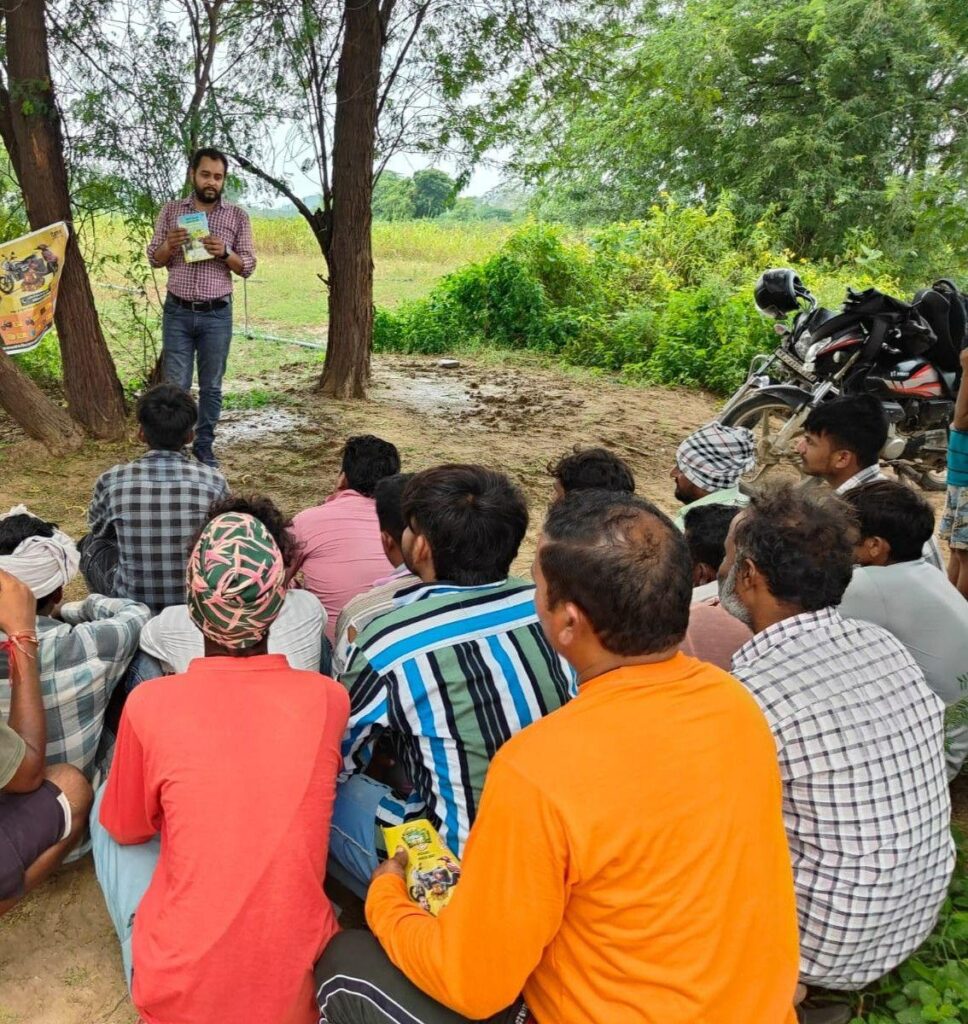
One of the notable elements of DeHaat’s model is its network of physical centres.
The company combines these local touchpoints with digital services, creating a hybrid approach to agricultural technology. This matters because India’s farming ecosystem remains geographically dispersed, with farmers operating across different crops, regions and market conditions.
DeHaat’s history also shows how the model has evolved. In its earlier years, the company used local micro-entrepreneurs and offline DeHaat centres to help farmers access agricultural products and services.
This provides a broader lesson for India’s digital economy: digitisation does not always mean removing the physical layer.
In sectors such as agriculture, healthcare, manufacturing and logistics, technology can often become more useful when it strengthens local networks rather than attempting to replace them.
- Founded in 2012, DeHaat is an Indian agritech startup.
- Connects farmers with technology, inputs, advisory and markets.
- Operates across 12+ agrarian states.
- Uses a mix of digital platforms and physical centres.
- Offers services including crop advisory, soil testing and market linkages.
- Acquired AgriCentral in 2025 to strengthen digital farm advisory.
- Focuses on improving the agricultural supply chain.
- Shows how technology can address real-world challenges in farming.
From Farm Inputs to Market Access
DeHaat’s business has also expanded beyond selling agricultural inputs.
ETtech reported that the company provides farmers with direct market access, agricultural inputs and expert advisory services, while also operating in agricultural commodity exports.
In January 2025, DeHaat acquired AgriCentral, a farm-advisory platform previously owned by Olam Agri. The companies said the acquisition was intended to strengthen DeHaat’s digital services and expand its reach among farmers. AgriCentral brought capabilities including crop-price information, crop planning, crop-health diagnostics and digital engagement tools.
That acquisition is significant because it shows how an agritech company can build capabilities not only organically, but also by adding specialised technology platforms to its existing agricultural network.
Growth Is Not the Only Story
DeHaat’s financial journey also illustrates an important reality about building businesses in complex sectors.
The company reported a substantial improvement in its financial position in FY25. ET reported operating revenue of about ₹3,010 crore and a net profit of ₹369 crore, but noted that the profit was significantly influenced by a ₹576-crore one-time non-cash fair-value adjustment.
That distinction matters.
A startup operating in agriculture needs to demonstrate not just user growth, but also the ability to build sustainable economics around procurement, distribution, technology, market access and value-added services.
DeHaat’s management has also pointed to higher-margin private-label products, exclusive agricultural-input distribution, exports, storage and food processing as areas supporting its business.
The Bigger Startup Lesson
DeHaat’s story offers a useful lesson for entrepreneurs looking beyond conventional consumer technology.
Some of India’s largest technology opportunities exist inside industries that are fragmented, physical and operationally complex.
Agriculture is one of them.
The opportunity is not simply to create another farming application. It is to understand the entire journey—from inputs and cultivation to advisory, aggregation and markets—and identify where technology can reduce friction and improve connections.
That requires more than software.
It requires distribution, local networks, supply-chain capabilities and a deep understanding of the industry’s economics.
India’s next generation of startups will not necessarily be defined only by consumer applications or valuation milestones.
Many could emerge from the country’s foundational industries—agriculture, manufacturing, logistics, energy and healthcare—where technology can solve problems that have existed for decades.
DeHaat’s journey illustrates that opportunity.
The more important question for agritech is not whether technology can reach farmers.
It is whether technology can become useful enough, accessible enough and economically viable enough to become part of everyday farming.
That is where the next chapter of India’s agritech story will be written.
KEY TAKEAWAYS
- Solve real problems: Build around a genuine industry need.
- Technology + accessibility: Digital tools work better when supported by local networks.
- Think beyond one product: Address multiple stages of the value chain.
- Build for scale: Strong distribution can be as important as technology.
- Industry knowledge matters: Understanding the sector helps create practical solutions.
- Long-term value: Sustainable businesses focus on customers, operations and economics—not just rapid growth.