
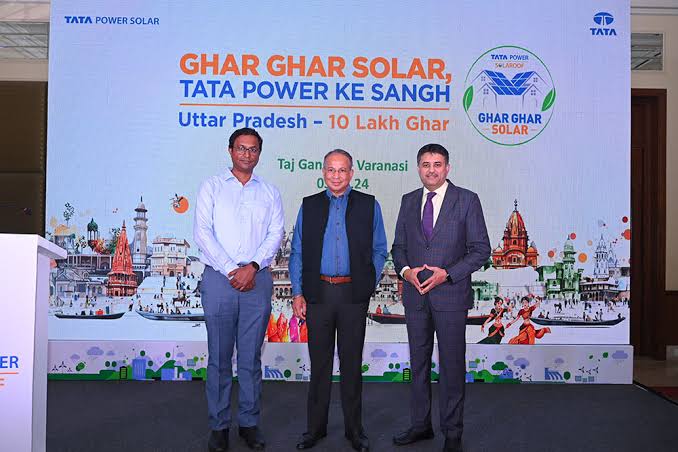
Tata Power is expanding its residential renewable-energy push in Bihar with the launch of its ‘Ghar Ghar Solar’ campaign, targeting rooftop solar adoption across 5 lakh households over the next three years. Launched on August 20, 2026, the initiative is designed to bring rooftop solar, battery storage and flexible financing to urban, semi-urban and rural markets across the state.
Under the programme, Tata Power Solaroof will offer rooftop solar systems ranging from 1 kW to 10 kW, allowing solutions to be tailored to different household electricity requirements. The campaign combines solar generation with battery storage and financing to create a more integrated distributed-energy proposition for consumers.
Affordability is a key component of the initiative. Residential consumers can begin their rooftop solar journey with an upfront payment of ₹999, while Tata Power says financing of up to 100% of the system cost is available, with flexible repayment tenures of up to 60 months. The company is also offering complimentary one-year solar insurance from Tata AIG to eligible residential customers under the programme.
The campaign also introduces ‘Mera Gaon, Mera Solar’, aimed at encouraging community-led solar adoption across rural and semi-urban Bihar. This approach broadens the initiative beyond individual rooftop installations and seeks to build awareness and participation at the community level.
Battery storage is another important element. Tata Power is introducing its MySine battery storage solution in Bihar, allowing consumers to store surplus solar power and use it when required. This solar-plus-storage model could become increasingly relevant as households look for greater control over their electricity consumption and backup requirements.
The Bihar launch comes as Tata Power continues to scale its rooftop solar business nationally. The company reported that Tata Power Solaroof had crossed 3.7 lakh installations with cumulative installed capacity above 4.8 GWp by the end of FY26, underlining the scale of its existing rooftop solar platform.
For Bihar, the opportunity is significant. A large residential base, growing electricity demand and increasing awareness of renewable energy create a potentially strong market for distributed solar solutions. Tata Power’s strategy combines affordability, financing, storage and community engagement to address some of the practical barriers to adoption.
The bigger shift is that rooftop solar is increasingly moving from a niche sustainability choice toward a mainstream household energy solution. By targeting 5 lakh homes, Tata Power is attempting to accelerate that transition in one of India’s large and growing states.
Bihar could become an important proving ground for mass-market rooftop solar. Tata Power’s 5-lakh-household target shows that the next phase of India’s clean-energy transition may be built not only through large solar parks, but also through millions of rooftops.