
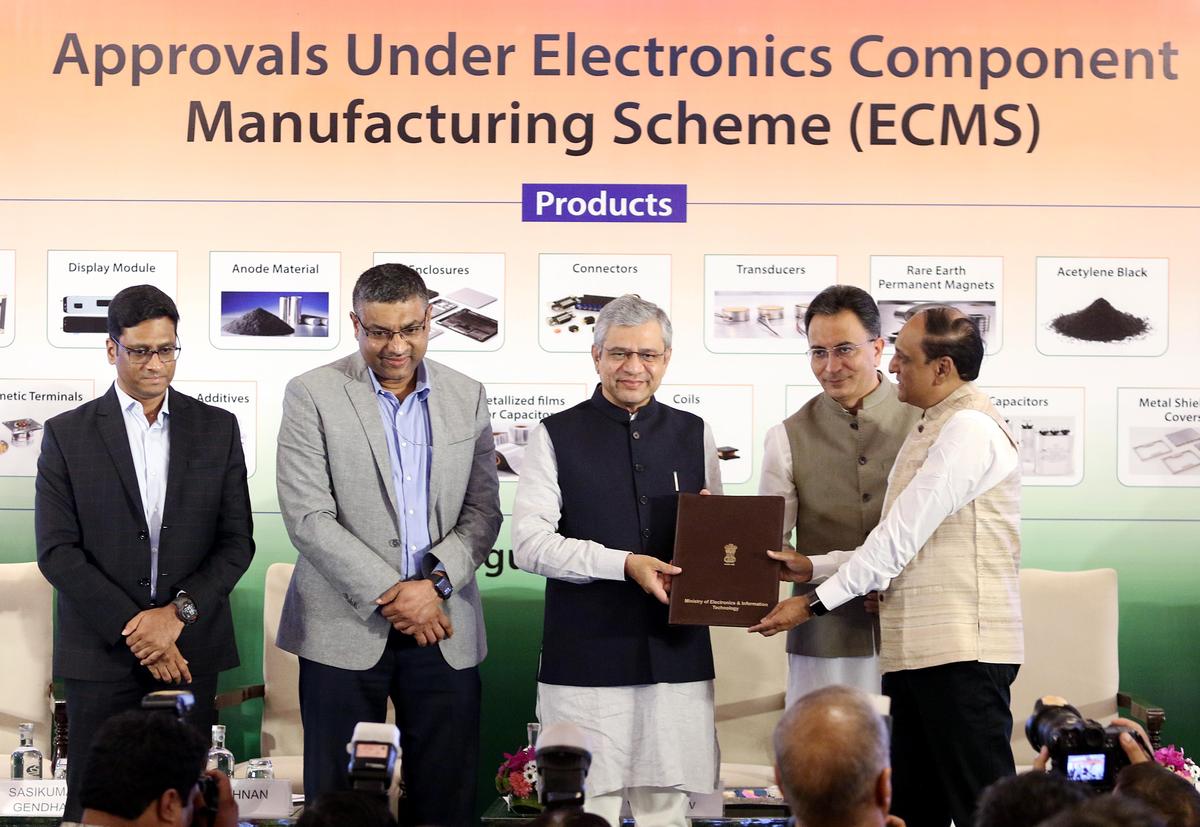
31 projects under the Electronics Components Manufacturing Scheme signal a deeper push to build India’s domestic electronics supply chain
India is stepping up its efforts to build a stronger domestic electronics manufacturing ecosystem, with the Ministry of Electronics and Information Technology (MeitY) approving 31 projects involving ₹7,877 crore in investment under the Electronics Components Manufacturing Scheme (ECMS).
The projects span 10 states and are expected to generate production worth around ₹82,243 crore and create nearly 10,000 jobs, according to IT Secretary S. Krishnan.
The latest approvals cover a broad range of products, including camera and display modules, connectors, optical transceivers, capacitors, coils, filters, rare-earth permanent magnets, electronic capital goods and other critical manufacturing inputs.
Moving Beyond Electronics Assembly
The significance of the ECMS goes beyond attracting investment. India has built considerable strength in electronics assembly, particularly in mobile phones, but a large part of the component ecosystem remains dependent on imports.
The latest projects target precisely this gap by encouraging manufacturing deeper within the supply chain. Building domestic capabilities in components, materials and production equipment can help manufacturers improve supply-chain resilience, reduce import dependence and increase the value captured within India.
Scale Is Accelerating
With the latest approvals, the government has cleared 106 applications across 30 product categories and 15 states. Cumulative proposed investment has reached ₹69,548 crore, exceeding the scheme’s original investment target of ₹59,350 crore. Expected production from approved projects has risen to about ₹5.34 lakh crore.
This acceleration suggests that India’s electronics strategy is increasingly moving from assembling finished products toward building a more complete manufacturing ecosystem.
The Bigger Industrial Opportunity
For India, the real opportunity lies in creating an interconnected domestic supply chain—from materials and components to equipment, assembly and finished electronics.
That could strengthen the country’s position as global manufacturers diversify their supply chains while also creating opportunities for Indian companies to become suppliers to international electronics and technology businesses.
The ₹7,877-crore approval is therefore not simply another investment announcement. It is another step in India’s attempt to move from being a major electronics assembler to becoming a competitive global manufacturing base for the components that power the industry.