
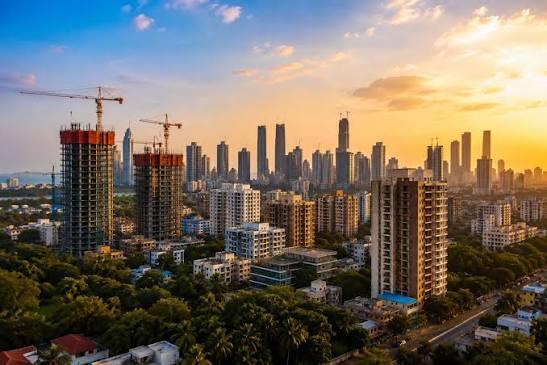
Mumbai’s Century Mills land is moving closer to a new chapter, with a ₹1,351-crore bid set to come before the Brihanmumbai Municipal Corporation’s Improvement Committee for final approval. The proposed 30-year lease of the 23,822-square-metre Lower Parel plot to Peddar Realty marks an important moment for one of Mumbai’s long-contested mill-land parcels.
But the significance of the project goes beyond the headline value of the bid. It brings together three major themes shaping Mumbai’s real-estate landscape: urban redevelopment, public-land monetisation and rehabilitation of former mill workers.
From Industrial Land to Urban Asset
Mumbai’s former textile mills have long represented the city’s transition from an industrial economy to a services- and real-estate-driven urban centre. Century Mills is part of that larger transformation.
The BMC’s successful recovery of ownership following a prolonged legal dispute has now opened the way for redevelopment. The Supreme Court’s ruling in favour of the civic body cleared an important legal hurdle and allowed the land to be brought back into the city’s development framework.
The proposed lease also demonstrates how strategically located public land can become a significant source of civic revenue while supporting redevelopment objectives.
A Significant Revenue Opportunity
Peddar Realty’s ₹1,351-crore offer is above the BMC’s ₹1,348-crore reserve price. The land’s current valuation has been reported at around ₹660 crore, highlighting the premium associated with the redevelopment potential of a prime Lower Parel parcel.
For the BMC, the transaction represents more than a one-time financial gain. A successful redevelopment could create additional economic activity, expand the formal property base and contribute to the wider regeneration of the surrounding area.
The project also reflects an increasingly important approach to urban development: using public assets to generate capital for public objectives.
Rehabilitation Remains the Core Test
The financial value of the project, however, cannot be separated from its social dimension.
The existing site includes 21 buildings with 476 tenements and 10 shops occupied by former mill workers and their families. The redevelopment plan is expected to replace the ageing structures with new residential buildings while providing rehabilitation homes to eligible residents.
For hundreds of families, therefore, the project is not simply a real-estate transaction. It represents the possibility of finally moving from decades of uncertainty into permanent, modern housing.
That makes execution critical. Timelines, rehabilitation arrangements and the quality of the new homes will ultimately determine whether the redevelopment delivers on its wider promise.
A Signal for Mumbai’s Mill Lands
The Century Mills project also carries implications for Mumbai’s broader redevelopment market.
Mill lands occupy some of the city’s most strategically located urban spaces. Their redevelopment can unlock substantial economic value, but these projects often involve complex ownership histories, worker rehabilitation, planning requirements and community expectations.
A transparent and successful execution at Century Mills could therefore provide a useful model for balancing commercial development with public interest.
The Bigger Urban Transformation
Mumbai is running out of easily developable land in its established business districts. As a result, redevelopment of brownfield and underutilised urban parcels will increasingly become central to the city’s growth strategy.
Century Mills illustrates this transition clearly. A site once associated with textile manufacturing is now being positioned for a new generation of residential development.
The challenge is to ensure that the economic value created by such transformation is shared across stakeholders—not only developers and the civic administration, but also the communities that have been connected to these sites for generations.
The ₹1,351-crore bid is therefore only the beginning. The real measure of success will be whether Mumbai can convert a valuable piece of industrial history into a financially viable, socially responsible and well-planned urban asset.