
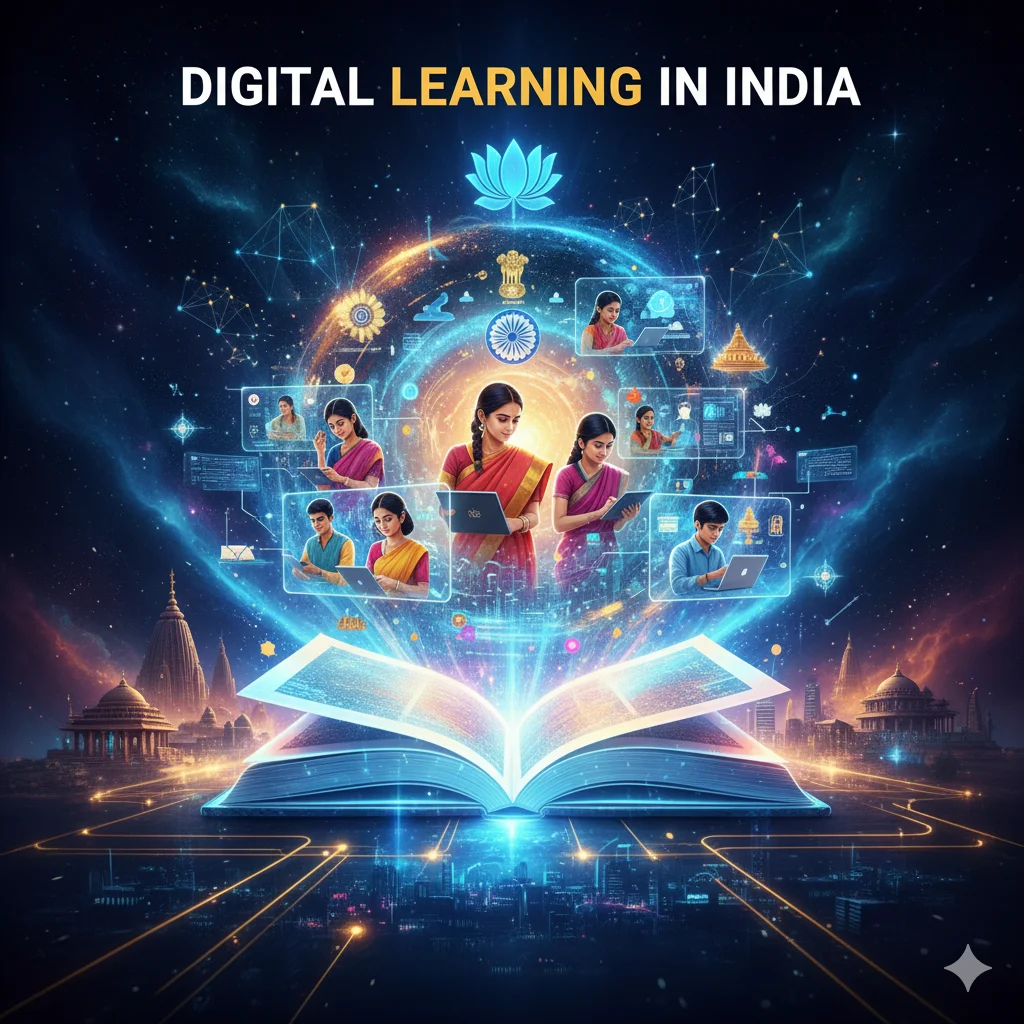
India’s education landscape is undergoing a digital transformation, driven by advances in technology, evolving learner expectations, and the growing demand for future-ready skills. As schools, universities, and EdTech companies embrace AI, hybrid learning, and digital platforms, the focus is shifting from simply expanding access to delivering more personalised, flexible, and industry-aligned education.
Digital Learning Moves Beyond the Pandemic
What began as an emergency response during the COVID-19 pandemic has evolved into a long-term transformation of India’s education sector. Digital learning is no longer limited to virtual classrooms—it is becoming an integral part of how schools, universities, and corporations deliver education, training, and skill development.
With improved internet connectivity, affordable smart devices, government-backed digital education initiatives, and the rapid adoption of artificial intelligence, India’s digital learning ecosystem is entering a new phase focused on quality, accessibility, and lifelong learning.
A New Generation of Learning Platforms
The digital education landscape has matured significantly over the past few years. Institutions are now combining online and offline teaching through hybrid learning models, giving students greater flexibility while maintaining classroom engagement.
Universities are investing in Learning Management Systems (LMS), virtual laboratories, digital libraries, AI-powered assessment tools, and cloud-based collaboration platforms. These technologies are enabling personalised learning experiences while improving student engagement and academic outcomes.
Meanwhile, EdTech companies are shifting their focus from rapid user acquisition to sustainable growth, enterprise learning, professional certifications, and skill-based education that aligns with industry requirements.
Government Initiatives Fuel Digital Transformation
India’s digital education strategy continues to gain momentum through initiatives such as DIKSHA, SWAYAM, the National Digital Library, and the Academic Bank of Credits (ABC) under the National Education Policy (NEP) 2020.
These platforms are expanding access to quality educational resources, enabling credit transfers between institutions, and supporting flexible, multidisciplinary learning. As digital public infrastructure strengthens, students across the country are gaining access to educational content regardless of geographical location.
AI Is Reshaping the Learning Experience
Artificial intelligence is rapidly becoming a defining feature of digital education. AI-powered tutors, adaptive learning platforms, automated assessments, multilingual translation tools, and personalised learning pathways are helping institutions tailor education to individual student needs.
Educators are also using AI to monitor student progress, identify learning gaps, and provide targeted interventions. As generative AI tools become more common, institutions are developing policies that encourage responsible and ethical use while integrating these technologies into teaching and research.
Industry Collaboration Strengthens Employability
Digital learning is increasingly being shaped by industry demand. Companies across technology, manufacturing, healthcare, finance, and renewable energy are partnering with universities and EdTech providers to deliver specialised certification programmes, virtual internships, and project-based learning.
This collaboration ensures that students graduate with practical skills aligned with emerging sectors such as artificial intelligence, cybersecurity, semiconductor technology, electric mobility, cloud computing, and advanced manufacturing.
Challenges Remain
Despite significant progress, digital learning continues to face challenges. Unequal internet access, limited digital infrastructure in rural areas, affordability of devices, and varying levels of digital literacy remain barriers to equitable education.
Institutions must also invest in faculty training, cybersecurity, and high-quality digital content to maximise the benefits of technology-enabled learning. Ensuring accessibility for learners across different socio-economic backgrounds will be critical to sustaining long-term growth.
The Next Chapter of Digital Education
India’s digital learning ecosystem is entering a phase where technology complements—not replaces—the classroom. The focus is shifting from simply delivering education online to creating intelligent, flexible, and industry-connected learning experiences.
As artificial intelligence, hybrid education, and digital public infrastructure continue to evolve, educational institutions have an opportunity to redefine how knowledge is delivered, assessed, and applied. The success of this transformation will depend on collaboration between educators, technology providers, policymakers, and industry.
For India, digital learning is no longer just an educational initiative—it is becoming a strategic foundation for developing a future-ready workforce, supporting innovation, and strengthening the country’s position in the global knowledge economy.