
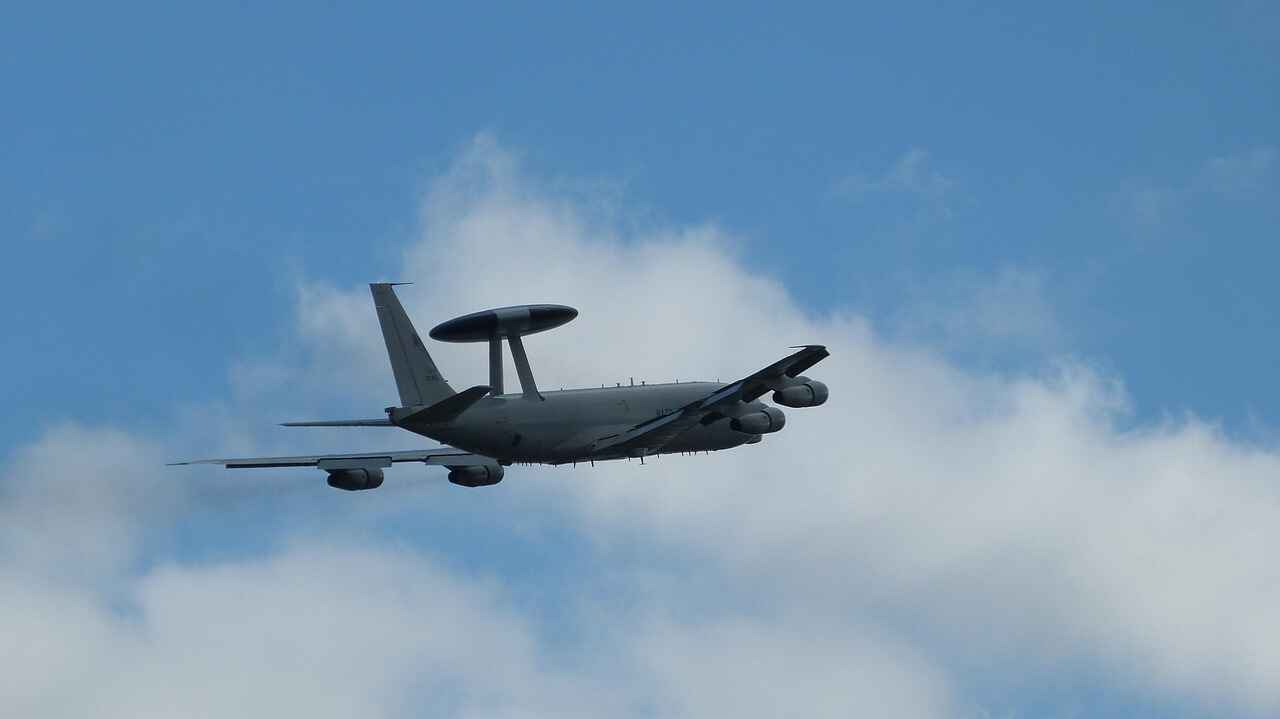
In modern warfare, information is often as decisive as firepower. The ability to detect, track, and respond to threats before they reach the battlefield has become a cornerstone of national defence. Recognizing this shift, India is advancing its airborne surveillance capabilities through the Netra Mk II Airborne Early Warning and Control (AEW&C) programme, a significant step toward strengthening the country’s integrated air defence network.
Developed by the Defence Research and Development Organisation (DRDO) in collaboration with the Indian Air Force and domestic industry, Netra Mk II is expected to provide enhanced situational awareness, long-range surveillance, and real-time command capabilities. The programme reflects India’s growing commitment to indigenous defence technologies while reinforcing the country’s ambition to become a global defence manufacturing hub.
Why Airborne Early Warning Matters
Modern air operations extend far beyond fighter aircraft and missile systems. Airborne Early Warning and Control (AEW&C) platforms act as command centres in the sky, continuously monitoring vast airspaces, identifying potential threats, and coordinating military responses.
Unlike ground-based radar, airborne surveillance systems can detect low-flying aircraft, cruise missiles, drones, and other aerial threats over much greater distances. By providing commanders with real-time intelligence, these aircraft significantly improve operational readiness and reduce response times during both peace and conflict.
For a country with extensive borders and strategic maritime interests, such capabilities are essential for maintaining air superiority and national security.
Netra Mk II: Expanding India’s Surveillance Capabilities
The Netra Mk II programme represents a major upgrade over India’s existing airborne surveillance fleet. Built on larger aircraft platforms and equipped with more advanced radar and mission systems, it is designed to provide wider coverage, greater endurance, and improved tracking capabilities.
The system will integrate advanced sensors, electronic intelligence, secure communications, and mission management technologies, enabling operators to detect multiple airborne targets simultaneously. This enhanced capability strengthens India’s ability to monitor its airspace while supporting coordinated operations across the Army, Navy, and Air Force.
Beyond surveillance, Netra Mk II is expected to improve command-and-control functions by linking multiple defence assets into a unified operational network.
Indigenous Innovation Drives Defence Modernization
One of the defining aspects of the Netra Mk II programme is its emphasis on indigenous technology and domestic manufacturing. The project aligns with the Atmanirbhar Bharat and Make in India initiatives, promoting greater self-reliance in high-value defence systems.
The programme involves collaboration among public sector enterprises, private aerospace companies, electronics manufacturers, software developers, and research institutions. Such partnerships strengthen India’s defence industrial ecosystem while encouraging innovation across radar systems, avionics, electronic warfare, and mission-critical software.
As indigenous expertise grows, India is reducing its dependence on imported surveillance platforms and building capabilities that can support future export opportunities.
Strengthening the Aerospace Ecosystem
The development of advanced AEW&C platforms also benefits India’s broader aerospace industry. Manufacturing sophisticated surveillance aircraft requires expertise in aircraft integration, sensors, communications, software engineering, precision electronics, and systems testing.
These capabilities create opportunities for MSMEs, startups, and component suppliers while generating high-skilled employment and accelerating technology transfer. The programme also enhances India’s position within the global aerospace value chain, encouraging future collaborations with international partners.
The Road Ahead
As aerial threats become more complex with the rise of stealth aircraft, long-range missiles, and autonomous drones, airborne surveillance will play an increasingly critical role in national defence strategies. Netra Mk II represents more than an aircraft programme—it is a strategic investment in information dominance, operational coordination, and technological self-reliance.
With continued investment in defence research, indigenous manufacturing, and advanced aerospace capabilities, India is steadily building a comprehensive surveillance architecture capable of supporting future military operations. Netra Mk II strengthens the nation’s eyes in the sky while reinforcing the foundation of a modern, network-centric defence force.
As India continues its journey toward becoming a global leader in defence and aerospace manufacturing, programmes like Netra Mk II demonstrate how innovation, industrial capability, and strategic vision are converging to secure the nation’s future.