
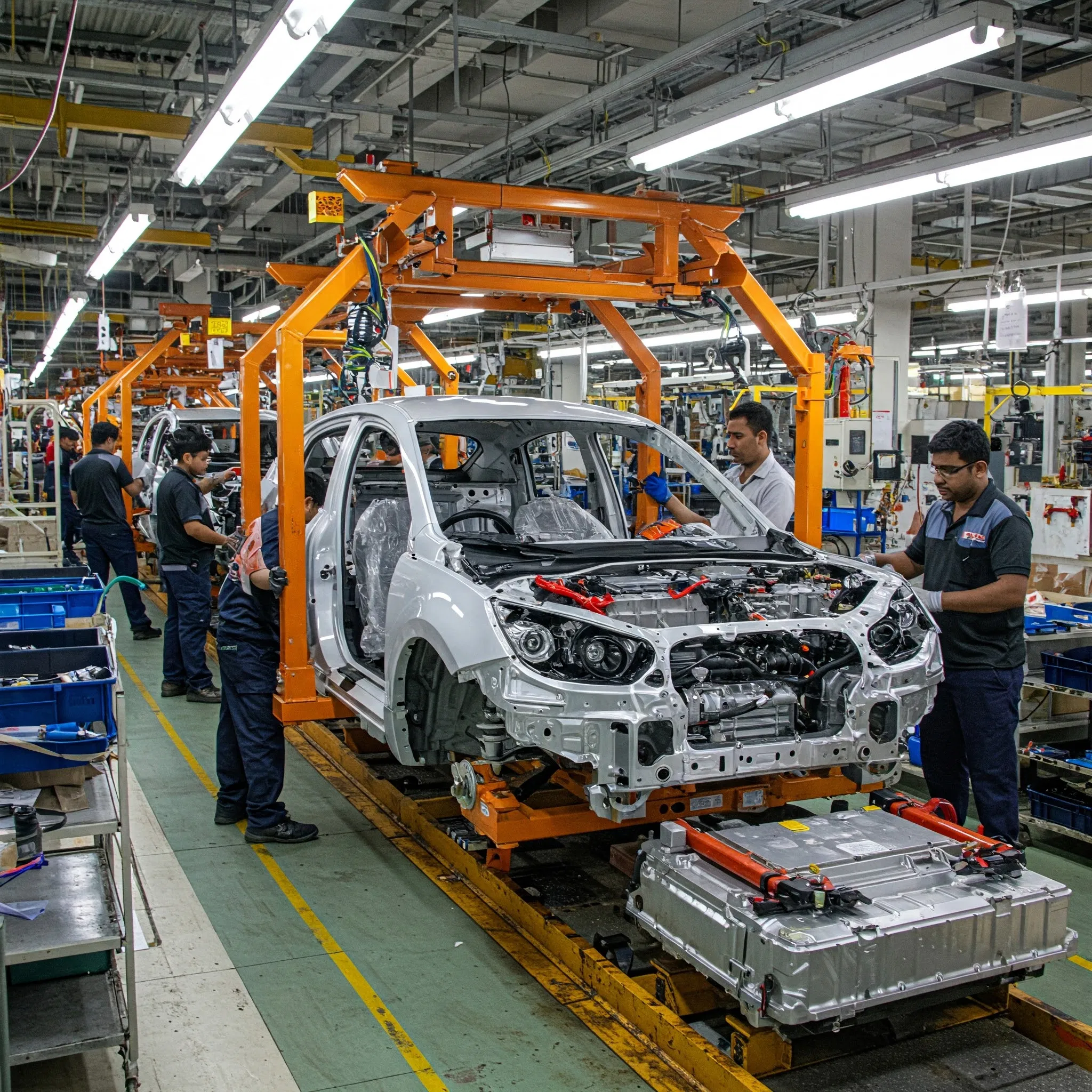
India is rapidly emerging as one of the most promising markets for electric mobility. With strong government support, rising domestic demand, increasing investments, and a growing manufacturing ecosystem, the country is positioning itself as a major player in the global electric vehicle landscape. As the transition toward sustainable transportation accelerates worldwide, an important question arises: Can India become a global EV manufacturing hub?
The answer increasingly appears to be yes. However, achieving this ambition will depend on India’s ability to strengthen its supply chains, accelerate innovation, and build globally competitive manufacturing capabilities.
Strong Policy Support Driving EV Manufacturing
Government initiatives have played a crucial role in accelerating the growth of the electric vehicle industry in India. Policies aimed at promoting domestic manufacturing, encouraging investments, and reducing dependence on imports have created a favorable environment for the EV sector.
Production-Linked Incentive (PLI) schemes, initiatives to strengthen charging infrastructure, and policies supporting advanced battery manufacturing are encouraging both domestic and global companies to expand their operations in India. These measures are laying the foundation for a robust EV manufacturing ecosystem.
Rising Domestic Demand Creating Scale Advantages
India is one of the world’s largest automobile markets, providing manufacturers with a significant domestic demand base. The increasing adoption of electric two-wheelers, passenger vehicles, and commercial fleets is creating large-scale opportunities for EV production.
Strong domestic demand allows manufacturers to achieve economies of scale, improve cost efficiencies, and accelerate innovation. As EV penetration increases, India could become not only a major consumer market but also an important production and export hub.
Growing Investments from Global and Domestic Players
Leading automotive companies, battery manufacturers, and technology firms are making substantial investments in India’s electric mobility ecosystem. Several global players are exploring partnerships, joint ventures, and manufacturing expansions to capitalize on India’s long-term growth potential.
Domestic companies are also significantly increasing investments in EV production facilities, battery technologies, software development, and charging infrastructure. These investments are helping create an integrated and competitive EV manufacturing ecosystem in India.
Battery Manufacturing and Supply Chain Localization
Battery production remains one of the most critical factors in establishing India as a global EV manufacturing hub. Reducing dependence on imported batteries and critical minerals is essential for improving competitiveness and long-term sustainability.
India is increasingly focusing on developing domestic battery manufacturing capabilities and strengthening local supply chains. Investments in advanced chemistry cell manufacturing, component production, and recycling infrastructure are expected to improve supply chain resilience and reduce production costs.
Localization efforts are also creating opportunities for component manufacturers, technology providers, and ancillary industries across the automotive value chain.
Manufacturing Competitiveness and Export Potential
India already possesses strong capabilities in automotive manufacturing, engineering talent, and cost-efficient production. These strengths provide a significant advantage in attracting global investments and positioning the country as a manufacturing base for electric vehicles.
As global automakers diversify their production networks, India has the opportunity to emerge as an important export destination for electric vehicles, batteries, and auto components. Competitive manufacturing costs and a growing supplier ecosystem could make India an attractive alternative in global supply chains.
Challenges That Need to Be Addressed
Despite significant progress, several challenges remain. Limited charging infrastructure, dependence on imported raw materials, technology gaps, and the need for greater investments in research and development continue to pose hurdles.
The availability of critical minerals such as lithium, cobalt, and nickel also remains a strategic concern. Additionally, workforce reskilling and advanced manufacturing capabilities will be essential to support long-term industry growth.
Addressing these challenges through policy support, strategic partnerships, and investments in innovation will be critical to realizing India’s global EV ambitions.
Future Outlook for India’s EV Manufacturing Industry
India possesses many of the key ingredients required to become a global electric vehicle manufacturing hub—a large domestic market, supportive policies, competitive manufacturing capabilities, and increasing investor interest.
While challenges remain, the long-term growth prospects are highly promising. Companies that invest in advanced technologies, battery ecosystems, localization strategies, and sustainable manufacturing practices will be well-positioned to benefit from the next phase of industry expansion.
As the global automotive industry accelerates its transition toward electric mobility, India has a unique opportunity to establish itself as a leading center for EV production, innovation, and exports. The coming decade could prove to be a defining period in positioning the country as one of the world’s most influential players in the future of electric mobility.