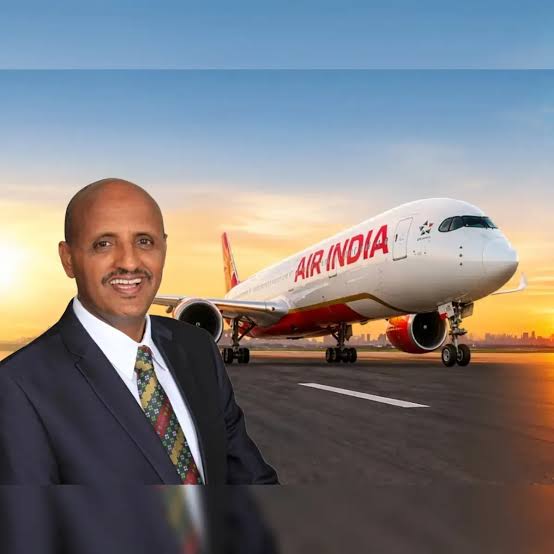

In an era of continuous disruption, leadership is no longer about managing stability but about driving reinvention across strategy, technology, talent and culture.
The role of the chief executive officer has changed dramatically over the last decade. Businesses today are navigating technological disruption, changing customer expectations, economic uncertainty, and increasing competitive pressures. In this environment, maintaining the status quo is no longer sufficient. Organizations increasingly require leaders who can continuously adapt and reinvent their businesses.
The End of Traditional Leadership Models
For decades, CEOs were primarily evaluated on financial performance, operational efficiency, and market expansion. While these responsibilities remain important, they are no longer enough.
The pace of change across industries means that competitive advantages can quickly disappear. Leaders are now expected to anticipate disruption, identify emerging opportunities, and position their organizations for long-term relevance. The CEO’s role has therefore expanded from managing performance to driving transformation.
Technology Transformation Is a Leadership Challenge
Artificial intelligence, automation, cloud computing, and data analytics are reshaping industries at an unprecedented pace. However, successful transformation extends far beyond technology implementation.
The greatest challenge lies in aligning technology investments with business strategy and organizational capabilities. CEOs must ensure that digital initiatives create meaningful value, improve customer experiences, and enable new business models.
Organizations that treat transformation solely as a technology project often struggle to achieve sustainable outcomes.
Building a Culture of Continuous Reinvention
Transformation cannot succeed without cultural change. Businesses increasingly require agile, collaborative, and innovative cultures capable of adapting to evolving market conditions.
Employees today expect purpose-driven organizations that encourage learning, experimentation, and empowerment. CEOs therefore play a critical role in creating environments where change is embraced rather than resisted.
Companies that embed adaptability into their organizational culture are often better positioned to navigate uncertainty and capitalize on new opportunities.
Strategic Reinvention Has Become Essential
Industries are being reshaped by changing regulations, sustainability expectations, new competitors, and shifting consumer behaviors. As a result, organizations must continuously reassess their strategies and business models.
The companies that lead the next decade are unlikely to be those that simply protect existing positions. Instead, they will be organizations willing to challenge assumptions, invest in future capabilities, and reinvent themselves ahead of market changes.
Transformation has become a strategic necessity rather than a temporary initiative.
The CEO as a Talent Architect
The future of work is redefining leadership priorities. New technologies require new skills, while changing workforce expectations are influencing how organizations attract and retain talent.
Modern CEOs must therefore become champions of workforce transformation. This includes investing in leadership development, reskilling initiatives, and organizational capabilities that prepare businesses for future challenges.
People remain at the center of every successful transformation journey.
Leading Through Uncertainty and Change
Periods of transformation inevitably create uncertainty. Employees, investors, and stakeholders increasingly look to leadership for clarity and confidence.
Successful CEOs communicate a compelling vision, create alignment across the organization, and inspire teams to embrace change. Transformation requires courage, resilience, and the ability to make strategic decisions despite ambiguity.
Leadership today is increasingly defined by the ability to navigate complexity while maintaining long-term direction.
The Rise of the Chief Transformation Officer
The modern business environment demands a new kind of leadership. CEOs can no longer limit their focus to operational excellence or short-term performance.
Their responsibility now extends to building organizations capable of continuous adaptation, innovation, and reinvention. In many ways, the title of Chief Executive Officer increasingly carries another responsibility—the responsibility of becoming the organization’s Chief Transformation Officer.
The future will belong to leaders who recognize that transformation is not a one-time initiative but an ongoing capability that defines long-term success. For modern CEOs, leading transformation has become one of the most important mandates of executive leadership.