
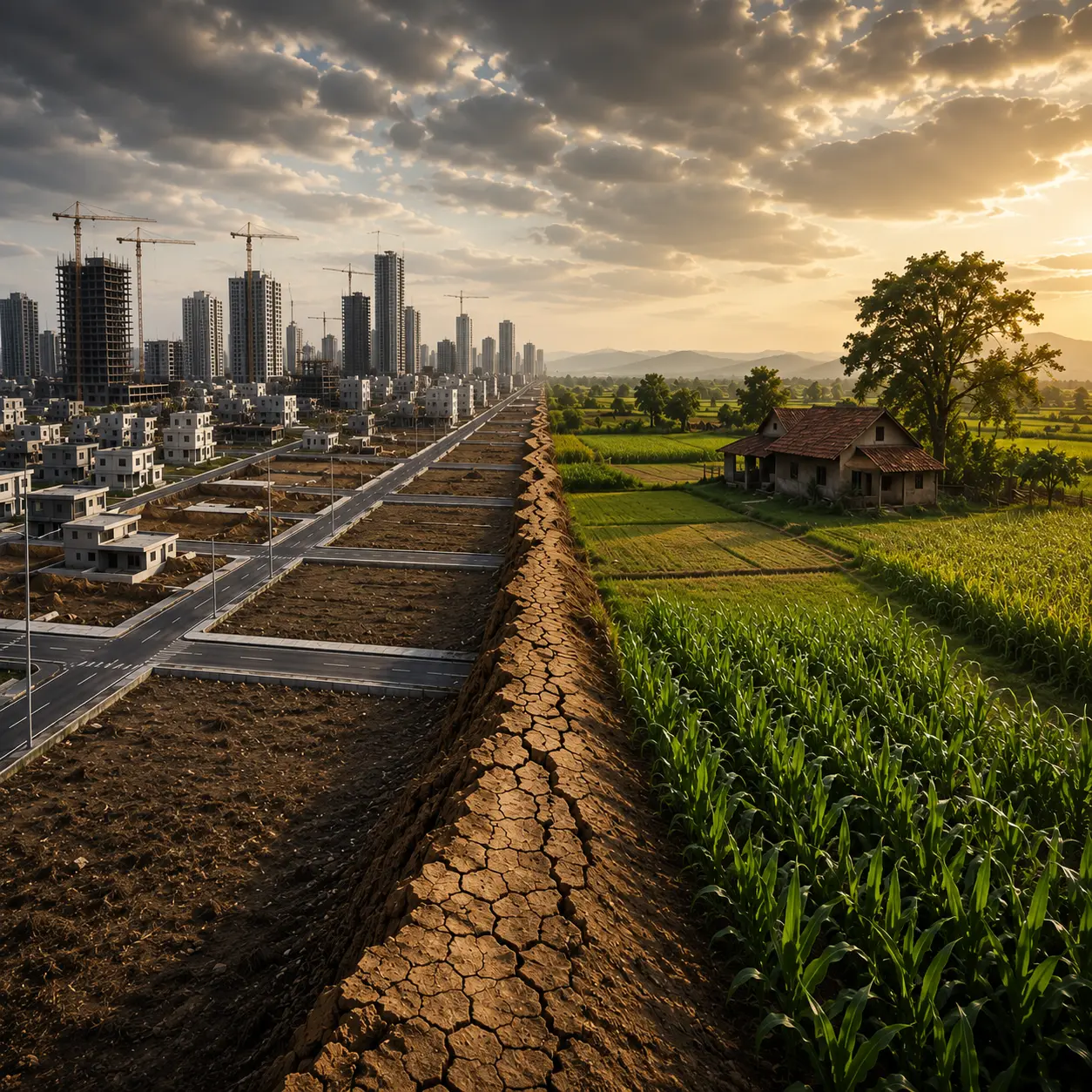
How the convergence of clean energy demand and the AI infrastructure boom is transforming active heartland topsoil into digital factories.
A quiet but aggressive green energy land rush is splitting the American heartland in two. On one side of a rural county road, generational crop farming continues as normal. On the other, rigid grids of steel and glass mark a massive shift in land use: a half-million-panel solar installation feeding a nearby tech campus.
This transformation is driven by a massive surge in AI data center power demand. As tech conglomerates race to expand cloud computing and artificial intelligence capabilities, they have encountered a physical bottleneck. They need vast power grids, close proximity to high-voltage transmission lines, and immense acreage. Consequently, data center land acquisition has become the newest, most disruptive asset class in commercial real estate, completely upending traditional agribusiness.
The Economic Pull: Farmland Lease Rates for Solar
The core driver of this transition is pure financial math. Operating an independent farm has become a high-risk, low-margin endeavor due to volatile crop pricing and rising input costs. When clean energy developers or tech infrastructure funds approach property owners, the financial incentives are hard to ignore.
In many regions, the farmland lease rates for solar or tech infrastructure far outpace what a farmer can expect to earn on corn, soy, or wheat. A 30-year triple-net land lease offers guaranteed, inflation-adjusted income that secures a family’s financial future.
However, this microeconomic win creates a macroeconomic problem for the regional agricultural supply chain. As thousands of prime acres are locked away behind chain-link fences, young farmers are priced out of rental acreage. When active farming drops, the local infrastructure feels the squeeze. Tractor dealerships lose buyers, seed suppliers face fewer orders, and community grain elevators lose the critical mass they need to stay solvent.
The Resource Conflict: Data Center Water Consumption
The tension surrounding this land rush extends deep beneath the topsoil. Beyond space, tech infrastructure requires an immense amount of local natural resources, creating a distinct infrastructure bottleneck.
A primary point of friction for local zoning boards is data center water consumption. A single large-scale facility can use millions of gallons of water daily for its evaporative cooling systems to prevent server racks from overheating. In major farming belts, tech infrastructure is drawing from the exact same underground aquifers that farmers rely on for crop irrigation during droughts, triggering fierce battles over local utility management.
This erosion of heritage has turned humble county zoning boards into some of the most politically charged corporate battlegrounds in the country. Neighbor is pitted against neighbor in packed, emotional public hearings. On one side are those defending property rights and clean energy; on the other are those fighting to preserve the rural character and food-producing capacity of their homes.
The Solution: Navigating the Agrivoltaics Business Model
The path forward for developers, utilities, and communities lies in co-location rather than displacement. The most promising framework addressing this friction is the emerging agrivoltaics business model.
Agrivoltaics is the practice of co-locating solar energy production directly alongside active agriculture. By raising solar arrays higher off the ground and spacing the rows wider apart, developers can create multi-use parcels.
- Livestock Integration: Sheep can graze safely beneath the structures, keeping vegetation down without the need for carbon-emitting industrial lawnmowers.
- Crop Cultivation: Shade-tolerant crops, hand-harvested vegetables, and pollinator-friendly plants thrive in the microclimate created under the panels, which also helps reduce soil water evaporation.
For tech firms aiming to build sustainable data center infrastructure, investing in agrivoltaics provides the “social license to operate” needed to pass local zoning boards. By ensuring that land remains tax-classified as agricultural and actively managed, developers can mitigate community backlash while securing the energy required to power the digital economy.
The global demand for a digital, green future is real—but it shouldn’t require starving the very land and people that feed us. By designing a framework that protects prime agricultural topsoil and respects the communities that manage it, the tech and energy sectors can build a sustainable portfolio that profits alongside the heartland, rather than at its expense.