
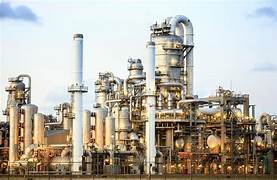
India’s chemicals industry is approaching a defining moment. Already a major manufacturing pillar, the sector is being positioned as a potential engine for export growth, import substitution and deeper integration into global value chains.
A NITI Aayog report, Chemical Industry: Powering India’s Participation in Global Value Chains, sets out an ambitious roadmap for the sector. It aims to increase India’s share of the global chemical value chain from around 3–3.5% in 2023 to 5–6% by 2030, while generating an estimated $35–40 billion in additional chemical exports and moving toward a net-zero chemical trade balance.
The opportunity is significant. But converting that ambition into export leadership will require India to move beyond scale and compete increasingly on technology, specialty products, infrastructure and supply-chain reliability.
From Chemical Manufacturing to Global Scale
India already has a broad chemical manufacturing ecosystem, producing more than 80,000 chemical products and serving industries ranging from agriculture and pharmaceuticals to automobiles, textiles and consumer goods. The sector contributes approximately 7% to India’s GDP, according to government data.
Yet India’s global position remains smaller than its manufacturing potential.
The NITI Aayog report highlights a major structural challenge: India recorded a chemical trade deficit of around $31 billion in 2023, reflecting significant dependence on imported feedstocks, intermediates and specialty chemicals.
Reducing that dependence while expanding exports could create a powerful double benefit for the industry.
The Specialty Chemicals Advantage
The next phase of India’s chemical growth is unlikely to come only from traditional commodity chemicals.
Specialty chemicals offer a higher-value opportunity because they are closely linked to specific industrial applications and require greater formulation expertise, consistency and technical support.
India’s established chemical base, engineering capabilities and large domestic market provide a foundation for moving further up the value chain.
Global companies are also seeking to diversify supply chains. That creates an opportunity for Indian manufacturers to become alternative production and sourcing partners.
But winning that business will require more than competitive labour costs. Global customers increasingly demand consistent quality, regulatory compliance, reliable delivery and technological capability.
Infrastructure Could Make or Break the Opportunity
Chemical manufacturing requires specialised infrastructure—from storage and transportation to waste management, utilities and environmental facilities.
NITI Aayog has highlighted the need for world-class chemical hubs, stronger port infrastructure, streamlined regulatory processes and improved connectivity to global markets.
The policy push is already visible.
The Union Budget 2026–27 allocated ₹600 crore for establishing three dedicated Chemical Parks, with the objective of providing shared infrastructure and plug-and-play facilities for chemical manufacturers.
If implemented effectively, such infrastructure could reduce capital requirements for individual companies while improving the competitiveness of Indian chemical clusters.
Closing the Import Gap
India’s export ambition cannot be separated from its import dependence.
Building domestic capabilities in critical intermediates and feedstocks could help manufacturers reduce exposure to global supply disruptions while improving the competitiveness of downstream industries.
This becomes particularly important as geopolitical tensions, freight disruptions and changing trade policies continue to reshape global supply chains.
A stronger domestic chemical ecosystem would give India greater control over both cost and supply security.
Sustainability Becomes a Competitive Edge
The chemical industry’s future will also be shaped by sustainability.
Global customers and regulators are demanding lower-carbon production, greater resource efficiency, circularity and cleaner manufacturing processes.
India therefore has an opportunity to build export competitiveness around next-generation chemical technologies rather than simply expanding conventional production.
The government’s ₹20,000 crore allocation over five years for carbon capture, utilisation and storage (CCUS) is part of the broader push toward industrial decarbonisation.
For chemical companies, sustainability is increasingly moving from a compliance issue to a market-access consideration.
The $35–40 Billion Export Opportunity
The headline opportunity is substantial.
NITI Aayog estimates that the sector could generate $35–40 billion in additional chemical exports by 2030. India’s chemical exports were approximately $44 billion in 2023, meaning the additional-export ambition could imply a total export level of roughly $79–84 billion, if the two figures are compared on a consistent basis.
This distinction is important.
The $35–40 billion figure is the additional export opportunity, rather than a stated $81 billion government target.
At the same time, NITI Aayog estimates India’s overall chemical market could reach approximately $400–450 billion by 2030, up from around $220 billion in 2023. That is the domestic market opportunity—not an export forecast.
Can India Capture the Opportunity?
The opportunity is clear, but execution will determine the outcome.
India will need to address infrastructure gaps, logistics costs, technology adoption, regulatory complexity, R&D investment and availability of specialised skills.
For chemical companies, the competitive equation is also changing. Scale remains important, but future winners are likely to combine scale with specialisation, technology, sustainability and global customer integration.
The government estimates that the chemical sector could generate around 7 lakh additional skilled jobs by 2030, reinforcing its potential impact beyond exports alone.
The Bigger Export Story
India’s ambition to expand chemical exports is ultimately part of a much larger industrial transformation.
The country wants to become a more important participant in global manufacturing value chains. Chemicals can play a foundational role because they feed into almost every major manufacturing ecosystem—from pharmaceuticals and electronics to automobiles, agriculture, textiles and consumer products.
The opportunity is therefore not simply about exporting more chemicals.
It is about building a chemical industry capable of supplying global manufacturers with higher-value products, dependable quality and resilient supply chains.
If India can make that transition, chemicals could emerge as one of the country’s most important export engines of the next decade.
The real opportunity is not merely to manufacture more. It is to move higher up the chemical value chain—and make “Made in India” increasingly indispensable to global industry.