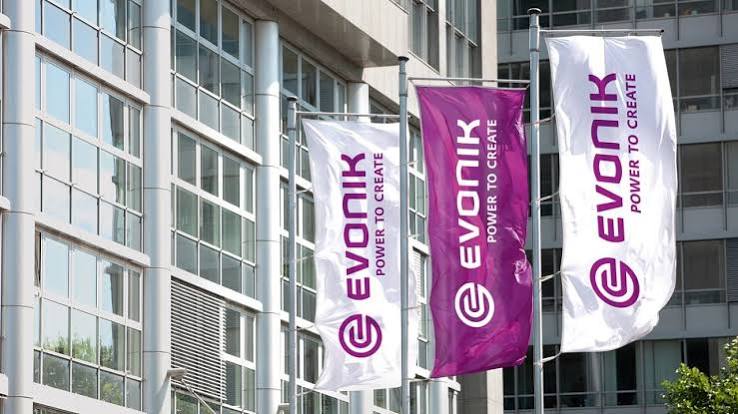
Europe’s push to strengthen its domestic supply of critical minerals has gained momentum as Evonik’s LiOCEL® adsorbent has been selected for the next phase of the Altmark Lithium Extraction (ALE) project in northern Germany.
The development highlights the growing role of Direct Lithium Extraction (DLE) technologies in the global lithium industry. As demand for lithium continues to rise, particularly from electric vehicles, energy storage systems and battery manufacturing, companies are exploring alternatives to conventional lithium mining and evaporation-based production.
Evonik’s LiOCEL Advances Direct Lithium Extraction
Evonik’s LiOCEL® is a lithium-selective adsorbent developed for direct lithium extraction applications. The technology is designed to selectively recover lithium from brines while supporting efficient processing and reduced dependence on conventional evaporation methods.
Its selection for the next phase of the Altmark lithium pilot follows earlier testing of the material under conditions relevant to the project. The next stage will allow the technology to be evaluated using geothermal brine from the Altmark resource.
The pilot programme is being developed with Fraunhofer IEG, which is working on a direct lithium extraction pilot plant capable of processing geothermal brine. The testing is expected to provide important data on lithium recovery, process performance and the suitability of different adsorbent materials for future commercial-scale operations.
Why the Altmark Lithium Project Matters
The Altmark region in northern Germany is attracting attention because of its potential lithium resources contained in deep geothermal brines. Unlike conventional hard-rock lithium mining, the project aims to recover lithium from underground brine resources.
This approach could offer a different pathway for European lithium production. Germany is one of Europe’s largest automotive and industrial economies, while the continent is simultaneously investing heavily in battery manufacturing and electric mobility.
A successful domestic lithium extraction project could therefore help strengthen the connection between Europe’s raw-material resources and its growing battery value chain.
The Growing Importance of Direct Lithium Extraction
Direct Lithium Extraction is becoming one of the most closely watched technologies in the lithium sector. Traditional lithium production methods can involve extensive mining operations or large evaporation ponds, depending on the resource.
DLE technologies instead seek to selectively extract lithium from brine using processes such as adsorption, ion exchange or other selective separation techniques.
The potential advantages include faster processing, reduced land requirements and the possibility of recovering lithium from resources that may not be suitable for conventional production methods.
However, commercial success depends on more than lithium recovery alone. Technologies must demonstrate consistent performance, durability, competitive operating costs and the ability to work effectively with the specific chemistry of individual brine resources.
From Lithium Pilot Plant to Commercial Production
The next phase of the Altmark project will therefore be an important test of scalability.
Pilot projects allow developers and technology providers to move beyond laboratory conditions and understand how extraction technologies perform with real-world brine. Factors such as lithium concentration, impurities, recovery rates, adsorbent lifetime, water consumption and energy requirements can significantly influence the economics of a future lithium project.
For Evonik, the Altmark project provides an opportunity to demonstrate the potential of LiOCEL® in an operational DLE environment. For the wider lithium industry, it offers another example of how advanced materials and chemical technologies could support the development of new lithium resources.
Europe’s Race for Domestic Lithium Supply
The project comes at a time when Europe is seeking to reduce its dependence on imported critical raw materials. Lithium has become strategically important because it is a key component in many rechargeable battery technologies.
The expansion of electric vehicles, renewable energy storage and battery manufacturing is expected to keep lithium demand strategically important for years to come.
Developing domestic lithium production could help Europe improve supply-chain resilience while supporting its broader industrial and clean-energy ambitions.
What Evonik’s LiOCEL Milestone Signals for Europe’s Lithium Industry
The selection of Evonik’s LiOCEL® for the next phase of the Altmark lithium pilot represents an important step in testing advanced direct lithium extraction technology in Germany.
The immediate focus will be on technical performance and scalability. But the broader significance is much larger: if DLE technologies can successfully unlock European geothermal lithium resources, they could become an important component of the continent’s future critical-minerals strategy.
For the lithium industry, the Altmark project is another indication that the future of battery-material supply may depend not only on discovering new resources, but also on developing smarter, more efficient technologies to recover the resources already available.