
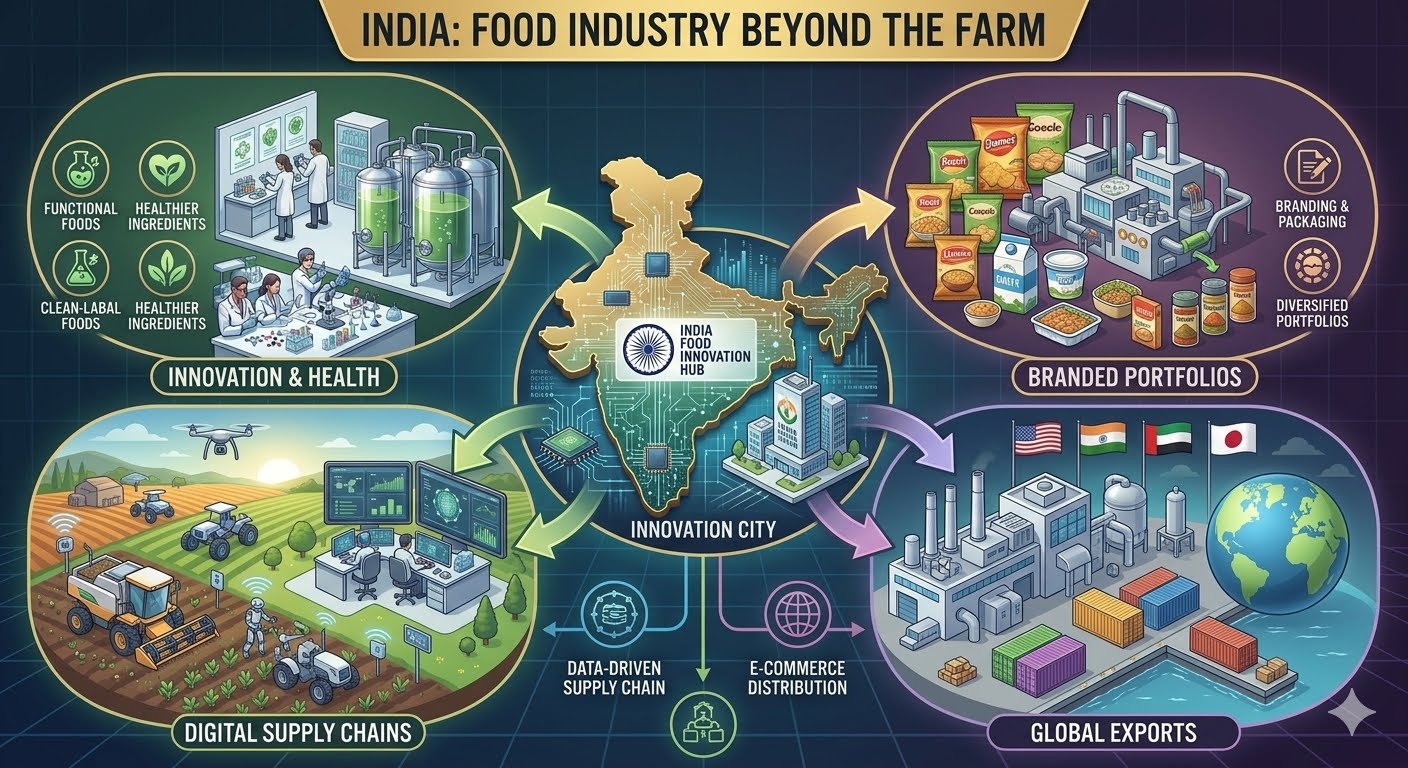
How innovation, value-added products, modern manufacturing, and changing consumer preferences are helping India’s food companies unlock new opportunities for growth.
The Food Industry Moves Beyond the Farm
India’s food industry is no longer driven solely by agricultural production. Today, food companies are creating value through processing, branding, product innovation, digital commerce, and global exports. As consumer preferences evolve, businesses are expanding beyond raw commodities to build diversified and high-value food portfolios.
This transformation is positioning the food industry as one of India’s fastest-growing manufacturing and consumer sectors.
Innovation Driving Value Creation
Leading food companies are investing in healthier products, premium brands, ready-to-eat meals, functional foods, and sustainable packaging to meet changing consumer demand.
Companies such as ITC Limited, Britannia Industries, Nestlé India, Amul, and Tata Consumer Products are expanding their product portfolios while investing in advanced manufacturing and nationwide distribution.
Technology and Digital Channels Fueling Growth
Automation, artificial intelligence, data analytics, and e-commerce are helping food companies improve production efficiency, strengthen supply chains, and better understand consumer behaviour.
Digital commerce has also enabled brands to reach consumers directly, creating new revenue opportunities and accelerating product innovation.
Expanding Global Opportunities
Indian food companies are increasingly targeting international markets with packaged foods, dairy products, beverages, spices, and ready-to-cook offerings. Strong manufacturing capabilities and growing global demand for Indian food products are opening new export opportunities.
By combining quality, innovation, and scale, the industry is strengthening India’s position in the global food economy.
The Road Ahead
The future of India’s food industry lies beyond agriculture. Companies that invest in innovation, technology, sustainability, and value-added manufacturing will be best positioned to lead the next phase of growth.
The next generation of food leaders will not simply sell agricultural products—they will build global brands, create consumer value, and shape the future of the food economy.