The ₹23,731-crore GOBARdhan scheme aims to scale up domestic compressed biogas production through procurement obligations, administered pricing and financial support for eligible projects.
India is stepping up efforts to expand domestic energy production as imported natural gas accounts for nearly half of its requirements. Union Petroleum and Natural Gas Minister Hardeep Singh Puri has highlighted compressed biogas (CBG) as an important part of the country’s strategy to strengthen energy security and diversify fuel supplies.
India’s liquefied natural gas (LNG) import bill exceeded $13 billion in FY2025–26. The government is looking to increase domestic fuel production while developing alternative sources of gas for transport, industrial and other applications.
A key part of this effort is the GOBARdhan National Circular Bioenergy Scheme, approved by the Union Cabinet on August 6, 2026, with an outlay of ₹23,731 crore. The scheme aims to expand domestic CBG production nearly tenfold over its implementation period, from FY2026–27 to FY2035–36.
GOBARdhan Scheme Links Waste Management with Energy Production
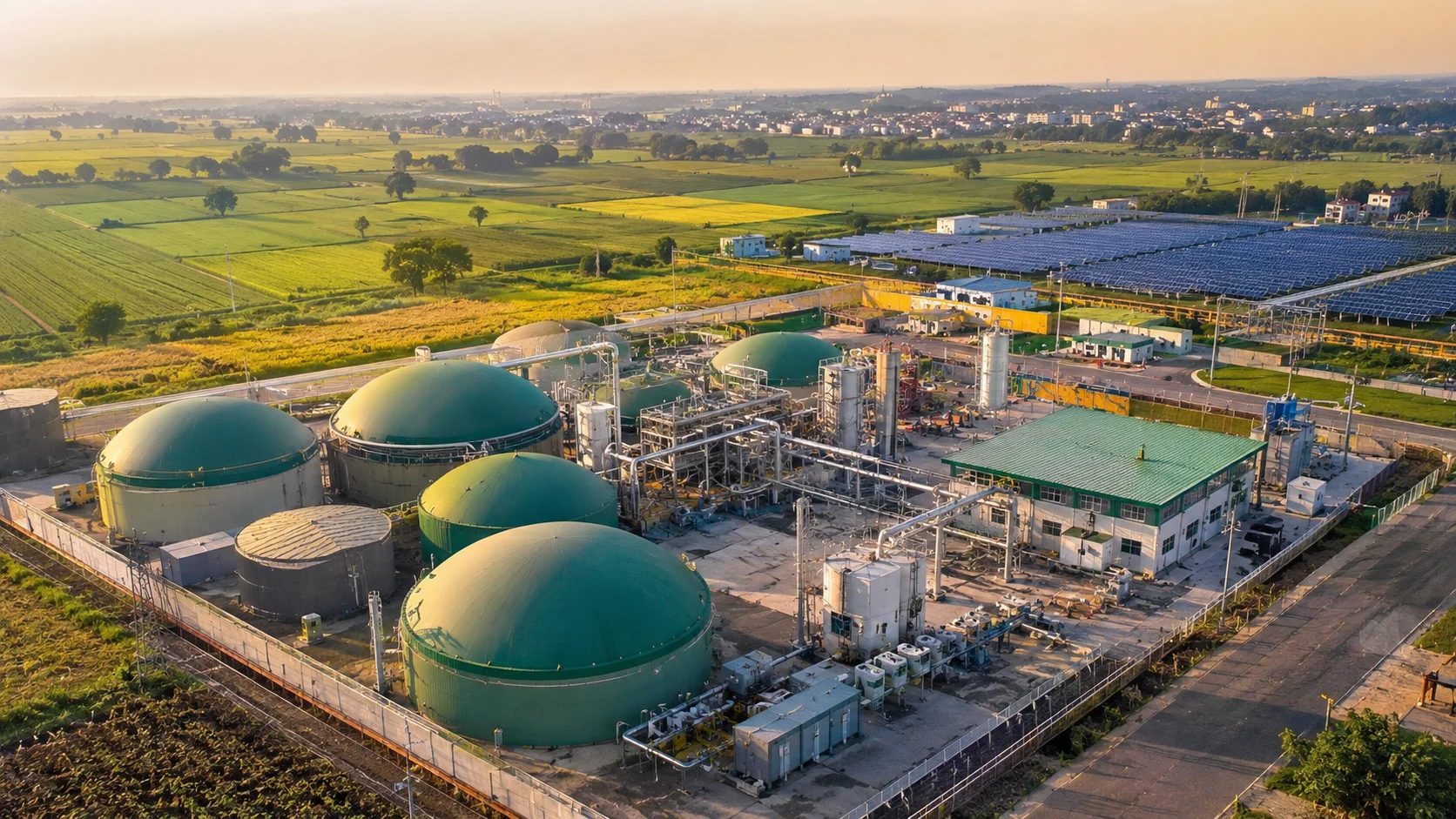
Compressed biogas is produced by processing organic materials such as agricultural residue, cattle dung, press mud and municipal organic waste. After purification and compression, CBG can serve applications compatible with conventional natural gas.
The GOBARdhan scheme seeks to develop an integrated ecosystem connecting feedstock collection, processing facilities, gas procurement and distribution infrastructure.
This approach could create additional commercial uses for agricultural and organic waste while supporting businesses involved in waste processing, renewable energy and rural enterprise.
For farmers and local suppliers, the development of CBG facilities could create opportunities to participate in feedstock collection and supply chains. The scale of these opportunities will depend on local biomass availability, logistics and the ability of projects to operate consistently.
Procurement Obligations Aim to Strengthen Market Demand
One of the major challenges for CBG developers is securing reliable buyers and predictable revenue.
The government’s framework includes phased CBG procurement obligations for the CNG transport and domestic piped natural gas (PNG) segments. The obligations are set at 3% for FY2026–27, 4% for FY2027–28 and 5% from FY2028–29 onwards.
These requirements are intended to encourage greater integration of CBG into the existing gas distribution market and provide producers with a clearer route to potential buyers.
The effectiveness of the framework will depend on implementation, compliance by obligated entities and the ability of producers to supply gas that meets applicable quality and operational requirements.
Government Sets Administered Procurement Price
The scheme also establishes an administered procurement price of ₹2,110 per million British thermal units (MMBtu) for CBG. This is the price framework for procurement from producers, not the retail price paid by consumers.
The pricing mechanism is intended to provide greater revenue visibility for eligible producers. However, the commercial performance of an individual project will continue to depend on production costs, feedstock availability, plant utilisation and transportation requirements.
The scheme also provides for capital assistance of up to ₹2 crore per tonne per day of installed CBG capacity for eligible projects, subject to the applicable conditions. The support framework is intended to help address investment requirements associated with developing and expanding CBG facilities.
Business Opportunities Across the CBG Value Chain
The proposed expansion could support demand for a range of industrial products and services.
Engineering and equipment manufacturers may find opportunities in biogas processing systems, gas purification, compression, storage and plant automation. Waste-management companies could participate in organic feedstock aggregation, while infrastructure providers could support gas transportation and distribution.
There is also a potential link with organic manure production. The material remaining after biogas generation can be processed into organic fertiliser products, subject to quality standards and applicable regulations. This creates an opportunity to connect renewable energy production with agricultural input markets.
For businesses considering investment in the sector, key considerations will include access to dependable feedstock, proximity to buyers, capital expenditure, financing costs and compliance with scheme requirements.
Domestic CBG Expansion and India’s Energy Security
India’s dependence on imported natural gas leaves domestic users exposed to international price movements and supply disruptions. Increasing domestic CBG production could diversify available gas supplies and strengthen the role of renewable fuels in the country’s energy mix.
However, a tenfold expansion in production remains a government target rather than an achieved outcome. Progress will depend on commissioning new facilities, expanding existing plants, maintaining reliable feedstock supplies and ensuring that procurement and distribution arrangements work effectively.
The GOBARdhan scheme provides a policy framework connecting waste utilisation, fuel production, infrastructure and market demand. Its implementation will be important in determining how quickly the CBG industry can scale.
For India’s energy and industrial sectors, the development of compressed biogas represents an opportunity to connect circular-economy practices with domestic fuel production. The coming years will show how effectively policy support translates into operational capacity, commercially viable projects and a larger contribution from locally produced renewable gas.