
At USD 27.5 billion in FY2025-26, bilateral trade highlights both the strength of the partnership and the scale of the opportunity ahead
India-Japan economic ties are entering a new phase, but the current level of bilateral trade suggests there is still significant room for expansion.
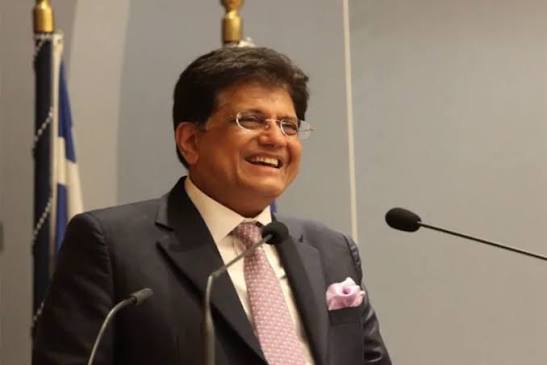
Speaking at the UP-Japan Investment Meet 2026, Commerce and Industry Minister Piyush Goyal said India-Japan bilateral trade stood at around USD 27.5 billion in FY2025-26, describing it as only a fraction of the potential between the two economies.
The message is significant. India and Japan already share deep economic and strategic links, yet their trade relationship remains relatively modest compared with the scale of their respective economies.
Investment Could Change the Equation
Goyal also highlighted a target of 10 trillion yen in Japanese investment in India over the next decade. The proposed investment focus extends across sectors such as artificial intelligence, semiconductors, critical minerals, batteries, energy and next-generation mobility.
This could shift the relationship from conventional trade toward deeper industrial collaboration.
For India, Japanese investment can bring capital, advanced manufacturing capabilities and technology. For Japanese companies, India offers a large domestic market, a growing industrial base and an opportunity to diversify global supply chains.
From Trade to Industrial Partnerships
The opportunity may be particularly strong in manufacturing. Japanese companies have already established a significant presence in India, but the next phase could involve deeper integration into emerging industries and domestic supply chains.
Semiconductors, batteries, electric mobility, clean energy and critical minerals could become important areas of cooperation as both countries seek greater resilience in strategic industries.
The India-Japan Comprehensive Economic Partnership Agreement (CEPA) also provides an institutional framework for expanding trade.
The Bigger Opportunity
The USD 27.5 billion figure is therefore less a measure of where India-Japan ties end—and more an indicator of where they could go next.
The challenge will be converting strong diplomatic relations and investment ambitions into larger trade flows, deeper manufacturing partnerships and more integrated supply chains.
India and Japan already have the trust. The next question is whether they can convert that trust into a much larger economic relationship.