
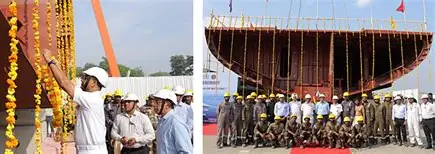
The Indian Navy has launched ‘Machilipatnam’, the seventh of eight Anti-Submarine Warfare Shallow Water Craft (ASW SWC) being built by Cochin Shipyard Limited (CSL), marking another milestone in India’s efforts to strengthen maritime security and indigenous defence manufacturing capabilities.
The launch highlights the growing role of domestic shipyards in meeting the Indian Navy’s operational requirements while supporting the country’s broader push towards self-reliance in defence production.
Strengthening Coastal Defence Capabilities
The ASW SWC vessels are designed to enhance the Navy’s ability to detect and counter underwater threats in coastal waters. These platforms are intended for anti-submarine warfare operations, underwater surveillance, low-intensity maritime operations and other coastal security missions.
With increasing strategic importance of the Indian Ocean region, strengthening near-shore defence capabilities has become a key priority for the Indian Navy. These vessels provide greater flexibility in monitoring maritime activity and responding to evolving security challenges.
Cochin Shipyard Drives India’s Defence Manufacturing Push
The construction of the ASW SWC series reflects the expanding capabilities of India’s indigenous shipbuilding sector. Built by Cochin Shipyard Limited, the programme demonstrates the ability of Indian shipyards to design, construct and deliver advanced naval platforms for the country’s defence requirements.
Beyond the shipyard, such projects create opportunities for a wider defence manufacturing ecosystem involving engineering companies, equipment suppliers, technology providers and specialised component manufacturers.
Indigenous Content Supports Defence Self-Reliance
The ASW SWC programme aligns with India’s Atmanirbhar Bharat vision by increasing domestic participation in critical defence platforms. A large share of equipment and systems for these vessels is sourced from Indian manufacturers, supporting local industrial capabilities and technology development.
The initiative also contributes to developing expertise in areas such as marine engineering, electronics, underwater systems and advanced manufacturing.
Growing Importance of Maritime Security
India’s expanding maritime trade, strategic location and increasing focus on the Indian Ocean Region have increased the importance of robust coastal security infrastructure. Modern naval platforms equipped with advanced sensors and surveillance capabilities play a crucial role in maintaining maritime awareness.
The addition of ASW SWC vessels strengthens the Navy’s ability to operate effectively in shallow coastal environments where underwater threats require specialised capabilities.
Defence Projects Create Industrial Opportunities
Large defence programmes have a multiplier effect on the manufacturing ecosystem. They encourage investments in precision engineering, research and development, skilled workforce creation and technology partnerships.
For India’s defence industry, projects such as the ASW SWC programme represent opportunities to build long-term capabilities and reduce dependence on imported platforms and systems.
The Road Ahead for India’s Naval Manufacturing
The launch of Machilipatnam represents another step in India’s journey towards building a stronger indigenous naval manufacturing ecosystem. As the remaining vessels under the ASW SWC programme progress, the initiative will further enhance India’s coastal defence capabilities while supporting domestic industrial growth.
The continued collaboration between the Indian Navy, public sector shipyards and domestic suppliers will remain critical in shaping India’s future defence manufacturing landscape.