
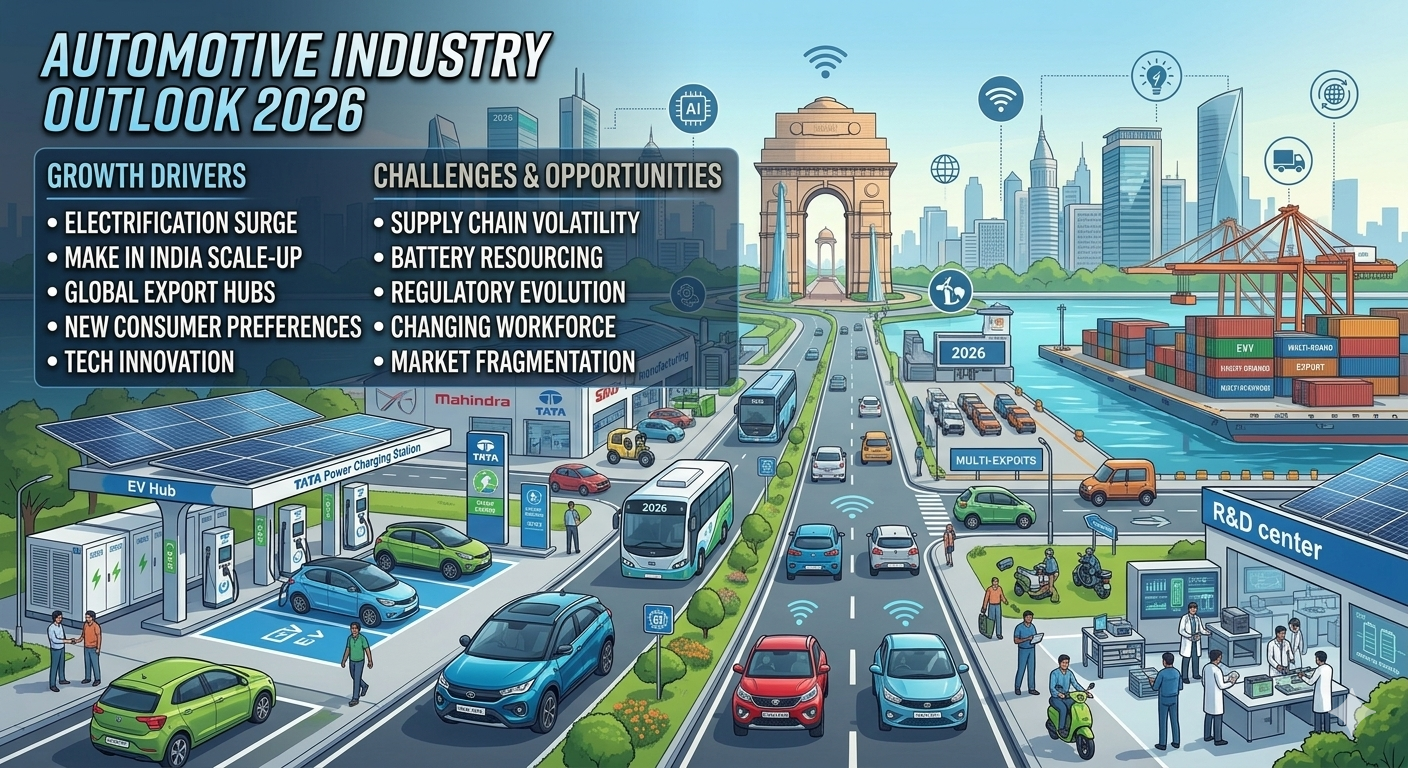
The global and Indian automotive industries are entering a transformative era in 2026. Rapid technological advancements, changing consumer preferences, sustainability initiatives, and evolving mobility trends are reshaping the sector. As one of the world’s largest automobile markets, India is well-positioned to emerge as a major hub for automotive manufacturing, innovation, and future mobility solutions.
Strong Growth Prospects for the Automotive Industry
The automotive industry outlook for 2026 remains positive, supported by rising disposable incomes, increasing urbanization, and growing demand across passenger vehicles, commercial vehicles, and premium segments. The recovery in consumer sentiment and continuous infrastructure development are expected to further accelerate industry growth.
In addition, government initiatives promoting domestic manufacturing and advanced mobility technologies are creating a favorable environment for long-term expansion in the Indian automotive industry.
Electric Mobility Driving Industry Transformation
The rapid adoption of electric vehicles (EVs) continues to be one of the biggest trends shaping the automotive sector. Automakers are investing heavily in electric mobility, battery technologies, and charging infrastructure to meet evolving consumer demand.
The transition toward EVs is also generating opportunities across the broader ecosystem, including battery manufacturing, charging networks, software development, and renewable energy integration. Companies that successfully adapt to this shift are likely to gain a significant competitive advantage.
Digital Technologies Reshaping the Automobile Sector
Technology is becoming a defining factor in the future of the automobile industry. Connected vehicles, artificial intelligence, data analytics, and software-defined platforms are transforming how vehicles are designed, manufactured, and experienced.
Consumers increasingly expect advanced safety systems, seamless connectivity, and personalized digital experiences. As a result, automotive companies are accelerating investments in digital transformation and smart mobility solutions.
Key Challenges Facing the Automotive Industry
Despite strong growth opportunities, the sector continues to face several challenges. Supply chain disruptions, semiconductor shortages, fluctuating raw material prices, and evolving regulatory requirements remain major concerns for manufacturers.
The transition toward electric mobility also requires significant investments in infrastructure, technology, and workforce development. Additionally, increasing competition and rapidly changing market dynamics are placing pressure on companies to continuously innovate while maintaining profitability.
Sustainability Becoming a Strategic Priority
Sustainability has become a core business priority across the automotive value chain. Companies are increasingly adopting green manufacturing practices, investing in renewable energy, and implementing carbon reduction strategies.
Environmental, Social, and Governance (ESG) initiatives are also influencing investment decisions and corporate strategies. Businesses that prioritize sustainability are expected to strengthen their brand reputation and long-term competitiveness.
Emerging Opportunities Across the Mobility Ecosystem
The transformation of the automotive industry is creating numerous opportunities for manufacturers, suppliers, technology providers, and investors. The rise of electric mobility, connected vehicles, autonomous technologies, and shared transportation models is opening new revenue streams across the industry.
India’s growing focus on supply chain localization and advanced manufacturing also presents significant opportunities for domestic component manufacturers and global investors seeking to diversify their operations.
Strategic Outlook for 2026
The automotive industry outlook for 2026 is defined by innovation, sustainability, and digital transformation. While challenges related to supply chains, regulations, and technological transitions remain, the industry also has unprecedented opportunities to redefine mobility.
Companies that invest in electric mobility, smart manufacturing, digital technologies, and customer-centric innovation will be best positioned to lead the next phase of growth. As the sector evolves, 2026 is expected to become a pivotal year in shaping the future of both the global and Indian automotive industry, creating new opportunities across the entire mobility ecosystem.