India’s automotive industry is entering a new phase of growth and transformation. Driven by technological advancements, sustainability initiatives, and changing consumer expectations, the Indian automotive industry is rapidly evolving into a global mobility powerhouse. As one of the world’s largest automobile markets, India is expected to witness significant developments in electric mobility, smart manufacturing, and connected vehicle technologies in 2026.
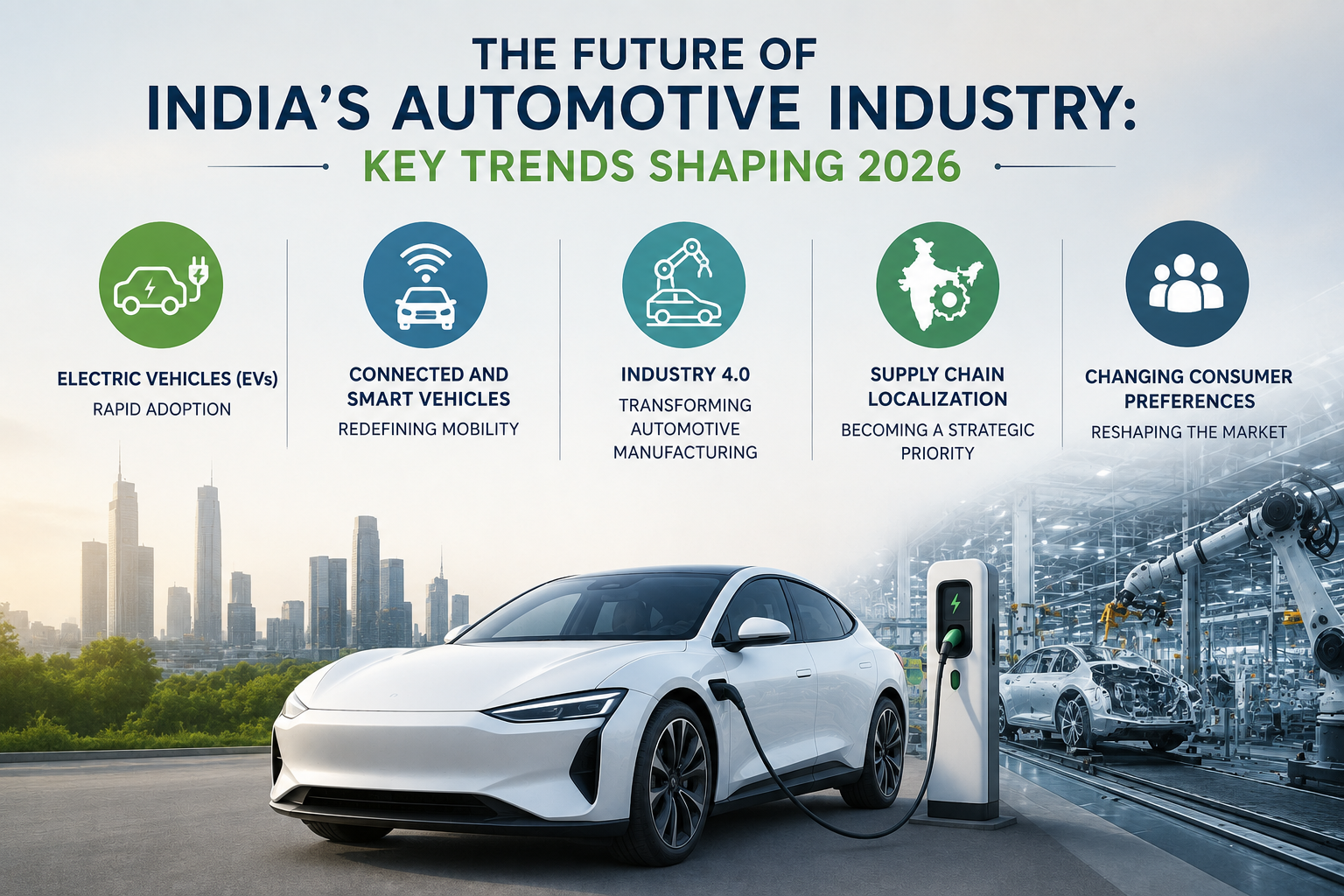
Electric Vehicles to Drive the Next Growth Phase
The rapid adoption of electric vehicles (EVs) in India remains one of the biggest trends shaping the future of the automotive sector. Government incentives, rising fuel costs, and increasing environmental awareness are encouraging both consumers and businesses to shift toward sustainable mobility solutions.
Leading automobile manufacturers are expanding their EV portfolios, investing in battery technologies, and developing charging infrastructure. The growth of electric two-wheelers, passenger vehicles, and commercial fleets is expected to accelerate the transition toward cleaner transportation.
Connected and Smart Vehicles Redefining Mobility
The rise of connected vehicles is transforming the traditional driving experience. Consumers today expect advanced features such as real-time navigation, voice-enabled controls, over-the-air software updates, and enhanced safety systems.
Automakers are increasingly integrating artificial intelligence (AI), Internet of Things (IoT), and data analytics into their vehicles. These technologies are enabling software-defined vehicles and creating new opportunities for subscription-based services and personalized mobility experiences.
Industry 4.0 Transforming Automotive Manufacturing
The adoption of Industry 4.0 technologies is revolutionizing automotive manufacturing in India. Companies are increasingly deploying automation, robotics, predictive maintenance systems, and digital twins to improve production efficiency and product quality.
Smart factories are helping manufacturers reduce operational costs, enhance productivity, and build more resilient production ecosystems. This manufacturing transformation is strengthening India’s position as a preferred destination for global automotive investments.
Supply Chain Localization Becoming a Strategic Priority
Recent global disruptions have highlighted the need for stronger and more resilient supply chains. Automotive companies are increasingly focusing on local sourcing, domestic component manufacturing, and semiconductor production.
India’s growing capabilities in auto components and advanced manufacturing are creating new opportunities for domestic suppliers and international investors. A stronger local supply chain will play a crucial role in enhancing the competitiveness of the automobile industry in India.
Sustainability and Green Mobility Taking Center Stage
Sustainability has become a key business priority for automotive companies. Manufacturers are investing in renewable energy, reducing carbon emissions, and adopting environmentally responsible production practices.
Environmental, Social, and Governance (ESG) initiatives are increasingly influencing corporate strategies and investment decisions. Green manufacturing and circular economy practices are expected to become major differentiators in the future of the automotive industry.
Changing Consumer Preferences Reshaping the Market
Indian consumers are increasingly seeking premium, technology-driven, and feature-rich vehicles. The growing demand for SUVs, advanced safety features, connected technologies, and digital buying experiences is reshaping market dynamics.
The vehicle purchasing journey is also becoming more digital, with customers relying on online research, virtual showrooms, and omnichannel experiences before making buying decisions.
The Road Ahead for India’s Automotive Industry
The future of India’s automotive industry will be defined by electrification, digital transformation, sustainability, and innovation. Companies that successfully adapt to emerging technologies and evolving consumer expectations will be best positioned to lead the next phase of industry growth.
With strong government support, increasing investments, and rising demand for advanced mobility solutions, India is poised to become one of the world’s most influential automotive markets. The trends shaping 2026 will not only redefine the Indian automobile industry but also establish the country as a global leader in the future of mobility.